9 Best Beaches in India 2026: Cleaner Than Maldives? [Costs]

![9 Best Beaches in India 2026: Cleaner Than Maldives? [Costs]](/_next/image?url=%2Fblog%2Findia-beaches%2Fhero.jpeg&w=2048&q=75)
🌧️ August 2026 Monsoon Update — Planning Your Coastal Escape
Updated third week of August 2026.
Right now, India's western and eastern coastlines are firmly in the grip of the monsoon. If you are reading this in August, the reality of Indian beaches is vastly different from the postcards. The Arabian Sea is extremely rough, swimming is strictly prohibited across almost all major beaches, and the iconic beach shacks in Goa and Kerala are dismantled.
However, August is the critical window for planning your post-monsoon trips. Here is the current ground reality and what you should be booking right now:
- Goa (Baga, Calangute, Palolem): Currently closed for swimming. The beaches are quiet and visually dramatic, but water sports and shacks are non-existent. Actionable advice: September-end to October flights and accommodations are currently significantly cheaper than peak season rates. Book your October long-weekend trips now before the post-monsoon price surge hits.
- Kerala (Kovalam, Varkala): Experiencing heavy rainfall. The cliffside cafes in Varkala remain open and offer a moody, romantic atmosphere, but the beach itself is largely inaccessible due to high tides.
- Andaman & Nicobar Islands: Ferries between Port Blair and Havelock/Neil Islands are frequently cancelled due to high winds and rough seas. Avoid planning an Andaman trip for August. Wait for the skies to clear in late October.
- East Coast (Puri, Marina): While slightly less volatile than the west coast right now, humidity is extremely high and the sea remains unpredictable.
Our August 2026 Recommendation: Do not travel to any Indian beach this month expecting to swim or do water sports. Use this month to secure early-bird bookings for mid-October onwards, when the sand is clean, the skies are blue, and the shacks reopen.
The Hype vs. Reality: Which Indian Beaches are Actually Worth It?
Not every Indian beach lives up to its reputation, and in 2026 that gap between hype and reality is wider than ever. This guide ranks India's coastline honestly — by the best time to visit each stretch, real INR costs on the ground, crowd density across seasons, and safety ratings built on verified local data. Whether you are a budget traveler deciding between Kerala and Odisha or someone trying to figure out if a famous beach is still worth the trip, this ranking gives you the practical answer instead of the Instagram one.
If you are looking for other popular destinations, read our detailed Dhuandhar Falls Bhedaghat trip guide to know the exact costs and best time to visit.
Top Beaches in India
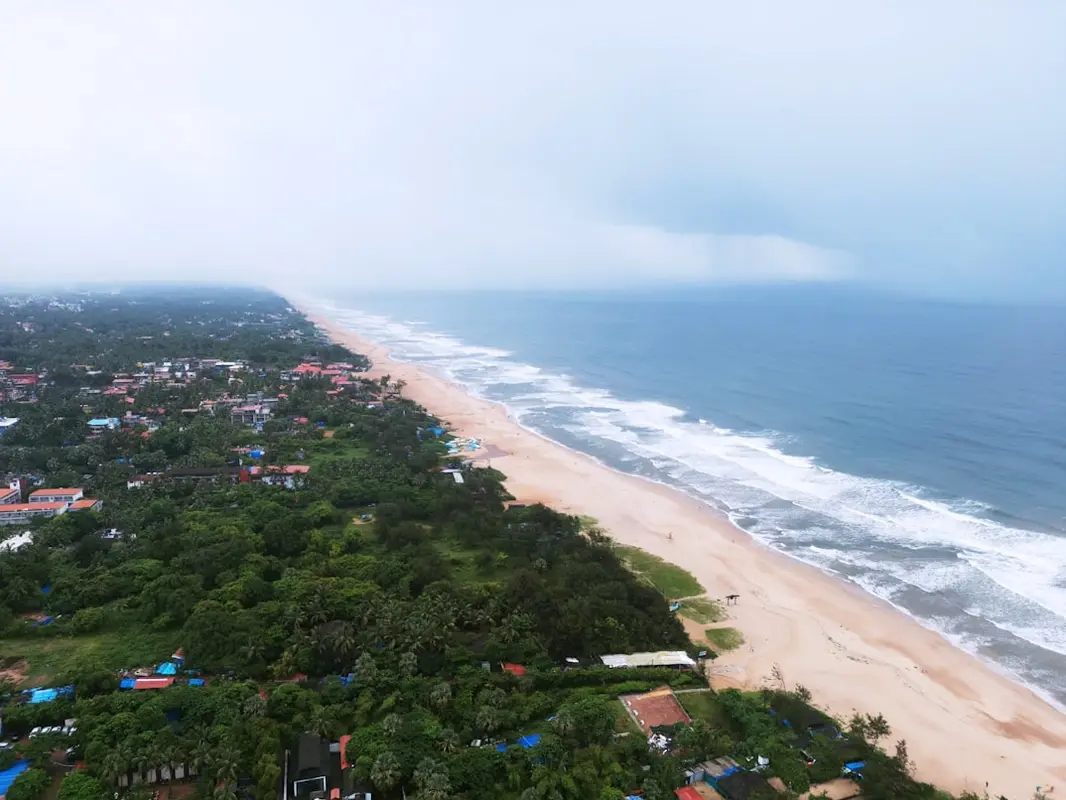
1. Baga Beach, Goa
For more practical information on shacks and local activities, read through our full Baga Beach guide.
Location: North Goa, 16 km from Panaji, 40 km from Dabolim Airport
Baga is the most commercially active beach in North Goa. The beach itself is a 1.5 km stretch where the Baga Creek meets the sea at the northern end — the creek area is calmer than the open sea and suitable for paddling. The primary draw here is the surrounding infrastructure: beach shacks operating from October through April, water sports operators along the sand, Tito's Lane with its cluster of clubs and bars, and immediate access to Calangute and Anjuna via the coastal road.
Baga is not the right choice if you want a quiet beach. It is the right choice if the goal is social activity, easy access to food and nightlife, and proximity to other North Goa beaches. Jet skiing (Rs 500–700 per round), parasailing (Rs 800–1,200), and banana boat rides are run by operators stationed along the beach.
Best time: Mid-November to mid-February for dry weather and fully operational shacks and clubs. Christmas–New Year is the most crowded period, with significantly higher accommodation prices.
Ideal duration: 2–3 days as a base for North Goa exploration.
Nearby attractions: Anjuna Flea Market (Wednesday, 8 km), Fort Aguada (12 km), Dudhsagar Falls jeep tours depart from operators in the area (60 km), Arpora Saturday Night Market (4 km).
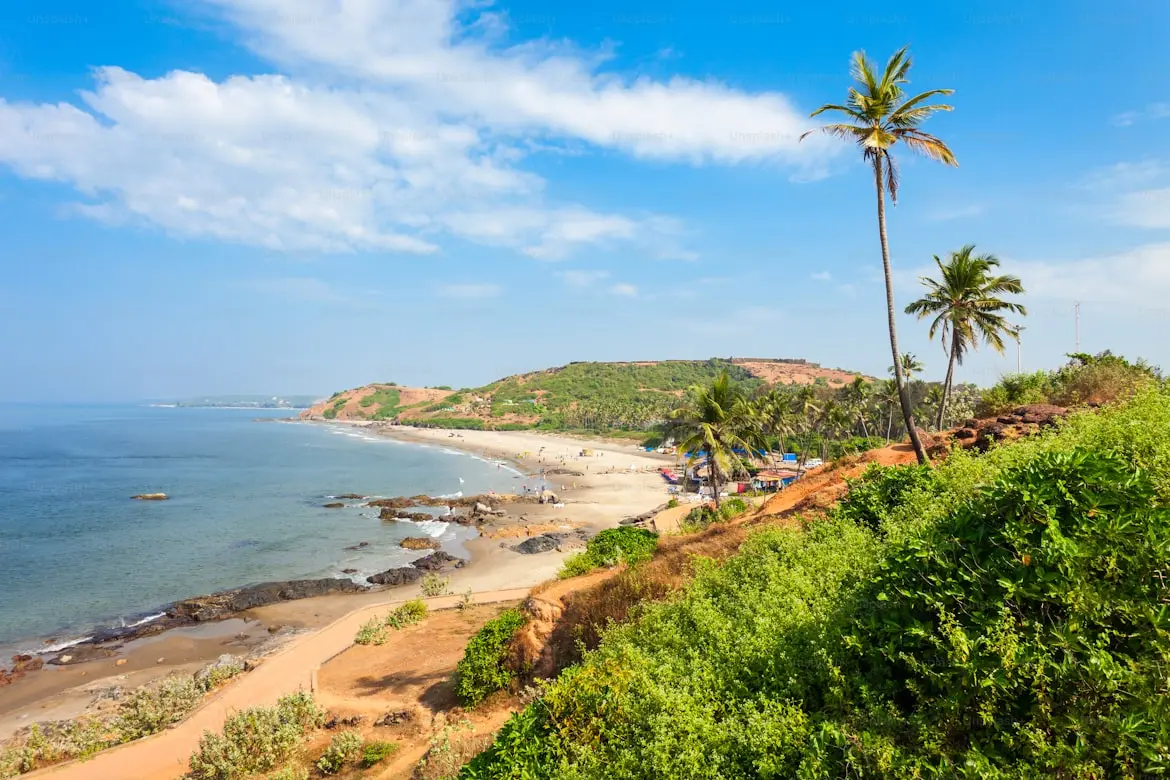
2. Calangute Beach, Goa
If you are planning to stay near the main strip, our comprehensive Calangute Beach guide covers everything from accommodation to food options.
Location: North Goa, 15 km from Panaji, 40 km from Dabolim Airport
Calangute is the longest beach in North Goa at approximately 7 km and the most visited beach in Goa overall. The volume of hawkers, water sports touts, and weekend domestic tourists makes it loud and crowded from October through January. For first-time visitors to Goa, Calangute is a useful orientation point — the main beach road, known as the Calangute–Baga road, has ATMs, pharmacies, bike rental shops, supermarkets, and restaurants within walking distance.
What Calangute offers that smaller Goa beaches don't is sheer choice — in accommodation across every budget tier, in restaurants from Rs 150 fish thalis to Rs 2,000 seafood dinners, and in activities. The sea is swimmable in most of the season except the height of the monsoon. For families with children, the central beach area with its gradual entry into the water is practical.
Best time: November to February for the most stable weather and full shack operations.
Ideal duration: 1–2 days for the beach itself; 3–4 days if using it as a base.
Nearby attractions: Baga Beach (2 km north), Fort Aguada and Sinquerim Beach (8 km south), Calangute Market for chikki and cashews, Candolim (3 km south) for a quieter evening.
If you only have a weekend, our Goa 3-day trip plan can help you cover the best spots, or if you prefer the hills, explore our Lonavala travel guide for a peaceful retreat.
If you're tired of just reading lists, try the free destination finder tool on our homepage. By simply entering your preferred state and travel style, you can explore personalized recommendations complete with actual booking options from trusted platforms like Viator, GetYourGuide, and Klook.
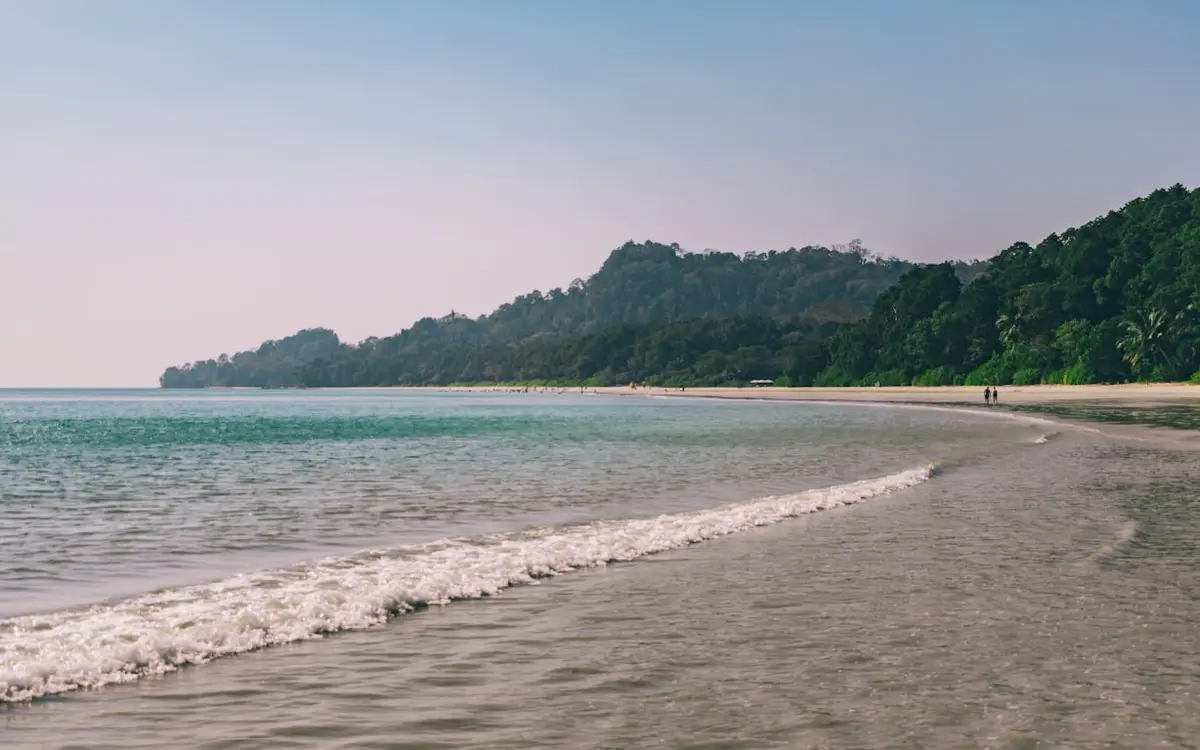
3. Radhanagar Beach, Havelock Island, Andaman & Nicobar Islands
For deeper insights on planning your stay, dive into our detailed Radhanagar Beach guide.
Location: Havelock Island (Swaraj Dweep), South Andaman district. Accessible by ferry from Port Blair (57 km, approximately 1.5–2 hours on government ferry or 45 minutes on speed ferry).
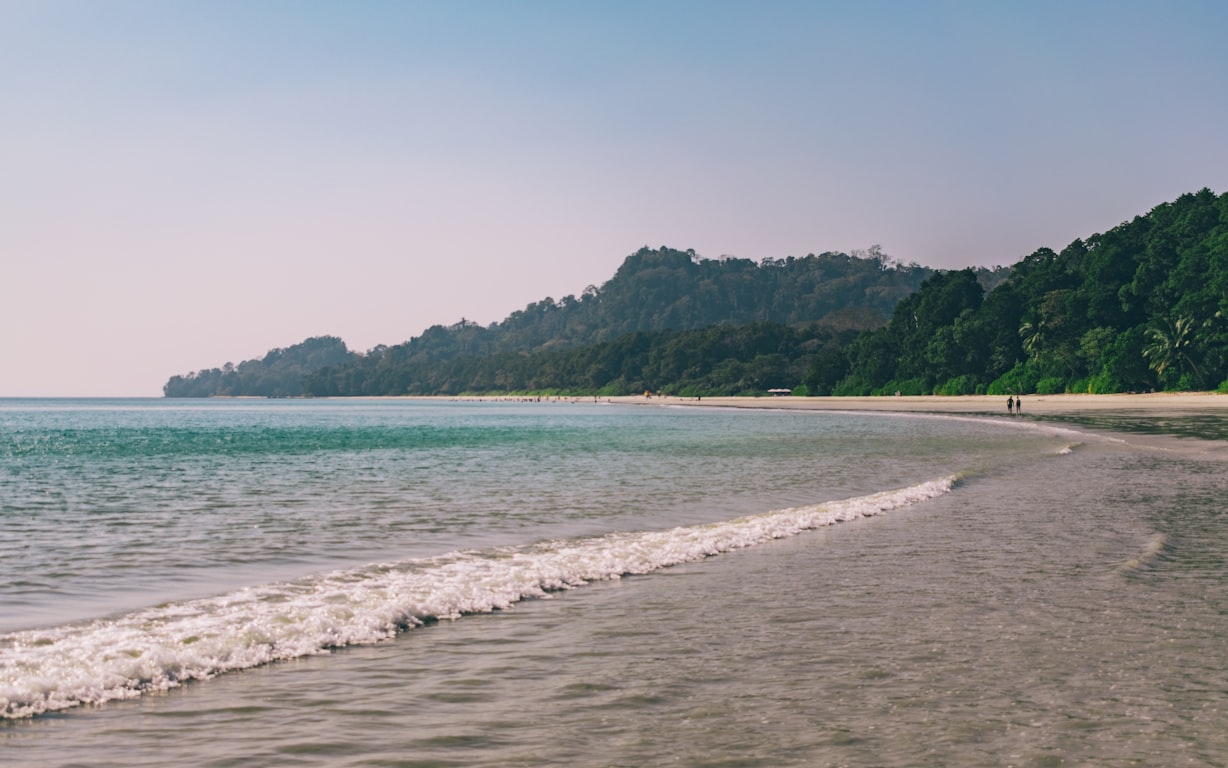
Radhanagar Beach on Havelock Island is consistently listed among the best beaches in Asia — a distinction it holds for specific, observable reasons. The beach is 2 km of powdered white sand with calm, clear water in shades of turquoise and deep blue. The forest behind the beach comes to the sand's edge. There are no commercial stalls, no hawkers, and no motorized water sports on the beach itself — development near Radhanagar is limited to a handful of resorts and the government-run tourist cottages set back from the beach.
Swimming is good here — the water is shallow for the first 40–50 metres with a sandy floor and good visibility. The beach faces west, which makes it one of the few east-coast beaches in India where you can watch a sunset over the sea.
Best time: November to April. May to September is monsoon season in the Andamans, ferry services are disrupted, and the sea is rough.
Ideal duration: 2–3 days on Havelock Island. Combine with Neil Island (1 hour by ferry) if spending a full week in the Andamans.
Nearby attractions: Elephant Beach (3 km by boat from Radhanagar, snorkeling and coral reefs), Cellular Jail in Port Blair (National Memorial, 57 km by ferry), Ross Island (accessible from Port Blair for a half-day), Kalapathar Beach on Havelock's east coast (15 km, sunrise views).
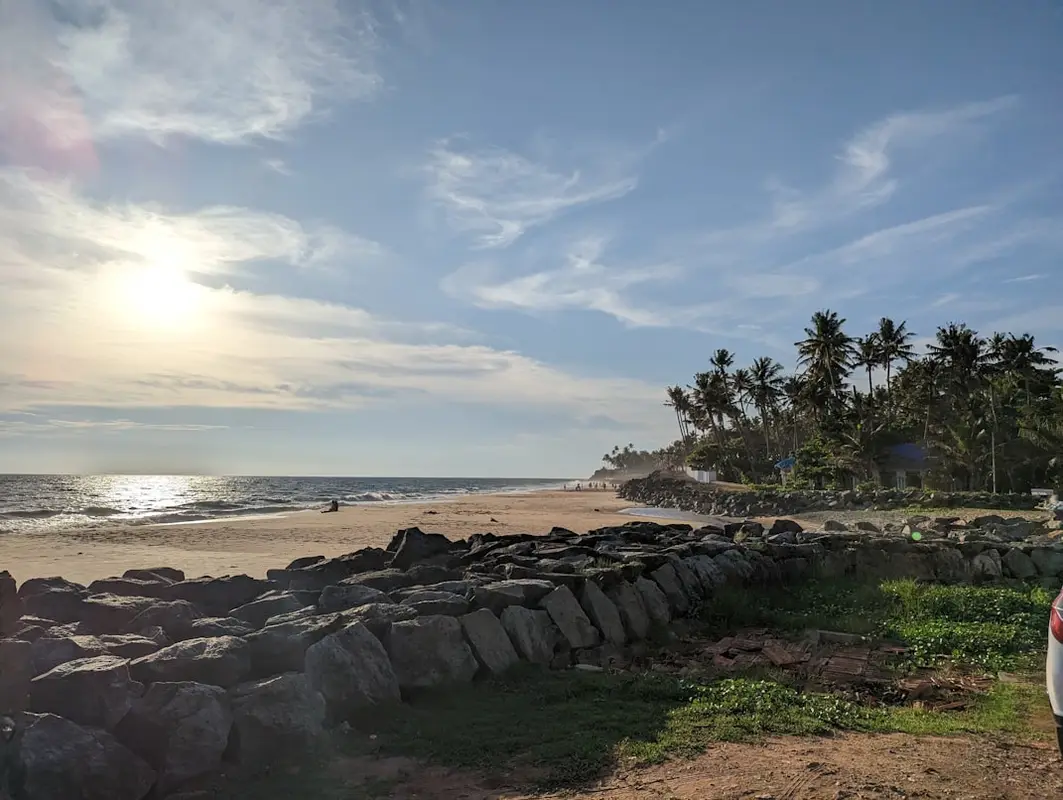
4. Varkala Beach, Kerala
To find out more about cliffside cafes and yoga retreats, browse our complete Varkala Beach guide.
Location: Thiruvananthapuram district, Kerala. 51 km from Thiruvananthapuram city, 3 km from Varkala railway station.
Varkala's defining physical feature is the cliff — a laterite cliff face running parallel to the beach, with cafes, guesthouses, and yoga studios built along the top edge. The beach sits at the base, accessible via steps cut into the cliff. The clifftop walkway gives a direct view of the Arabian Sea from above. The beach is approximately 1 km in the main tourist section, with calmer water at the southern end near the Janardhana Swami Temple.
This is not a water sports beach — the sea can be rough with strong lateral currents in certain parts of the year. The appeal is the setting: the cliff, the red-earth pathways, the mix of yoga retreats and budget cafes, and the less-commercial atmosphere compared to Kerala's more tourist-heavy Kovalam.
Best time: October to early March. The southwest monsoon is strong here from June through September.
Ideal duration: 2–3 days.
Nearby attractions: Janardhana Swami Temple (at beach level, significant pilgrimage site), Ponnumthuruthu Island (8 km, accessible by boat), Thiruvananthapuram city and Padmanabhaswamy Temple (51 km).
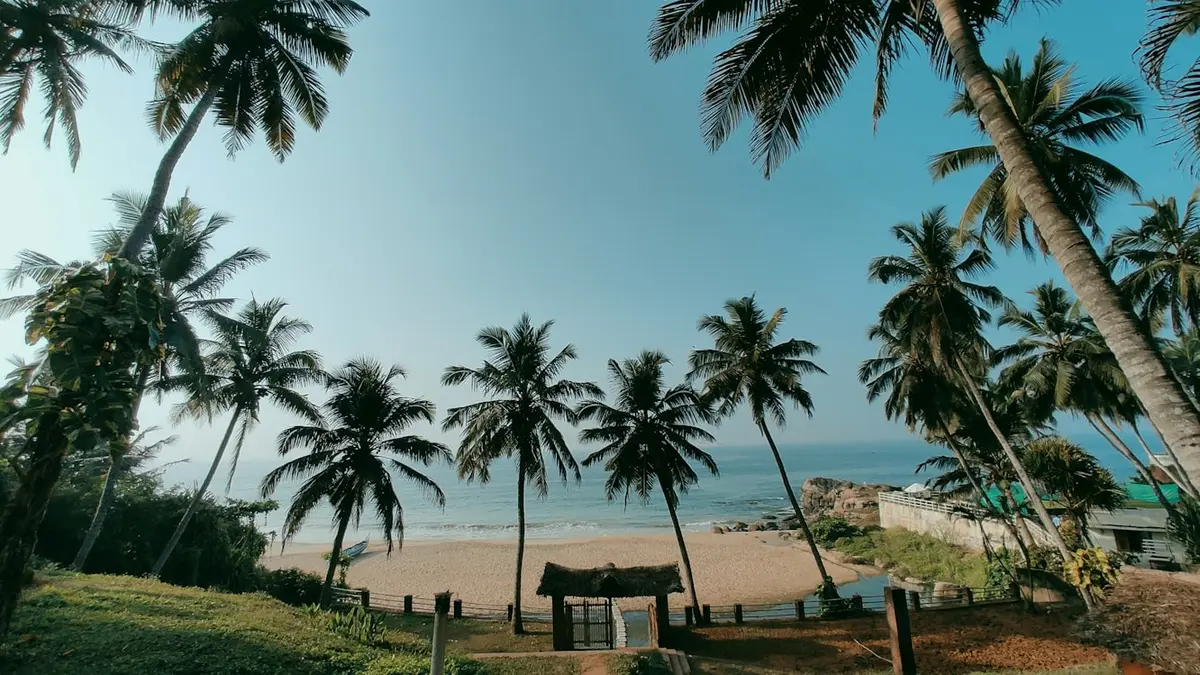
5. Kovalam Beach, Kerala
Families looking for safe swimming conditions and nearby attractions should review our full Kovalam Beach guide.
Location: Thiruvananthapuram district, 16 km from Thiruvananthapuram city and airport.
Kovalam is three connected coves — Lighthouse Beach (the main beach), Hawah Beach, and Samudra Beach — separated by rocky headlands. The 30-metre lighthouse at the southern end of Lighthouse Beach is a functional navigational structure and open to visitors. The sea at Lighthouse Beach is generally calmer than Varkala and monitored by lifeguards, making it more suitable for families and non-swimmers who want to enter the water.
The beachfront road has a concentration of Ayurveda centres offering treatments from Rs 800–2,500 per session — legitimate clinics alongside tourist-oriented ones, so ask specifically for certified practitioners if that matters. Seafood restaurants on the beach road serve karimeen (pearl spot fish), tiger prawns, and the standard Kerala fish curry with rice for Rs 250–600 per plate.
Best time: September to early March.
Ideal duration: 2–3 days.
Nearby attractions: Padmanabhaswamy Temple in Thiruvananthapuram (16 km), Thiruvananthapuram Zoo (17 km), Poovar Island backwaters (25 km by boat from Kovalam).
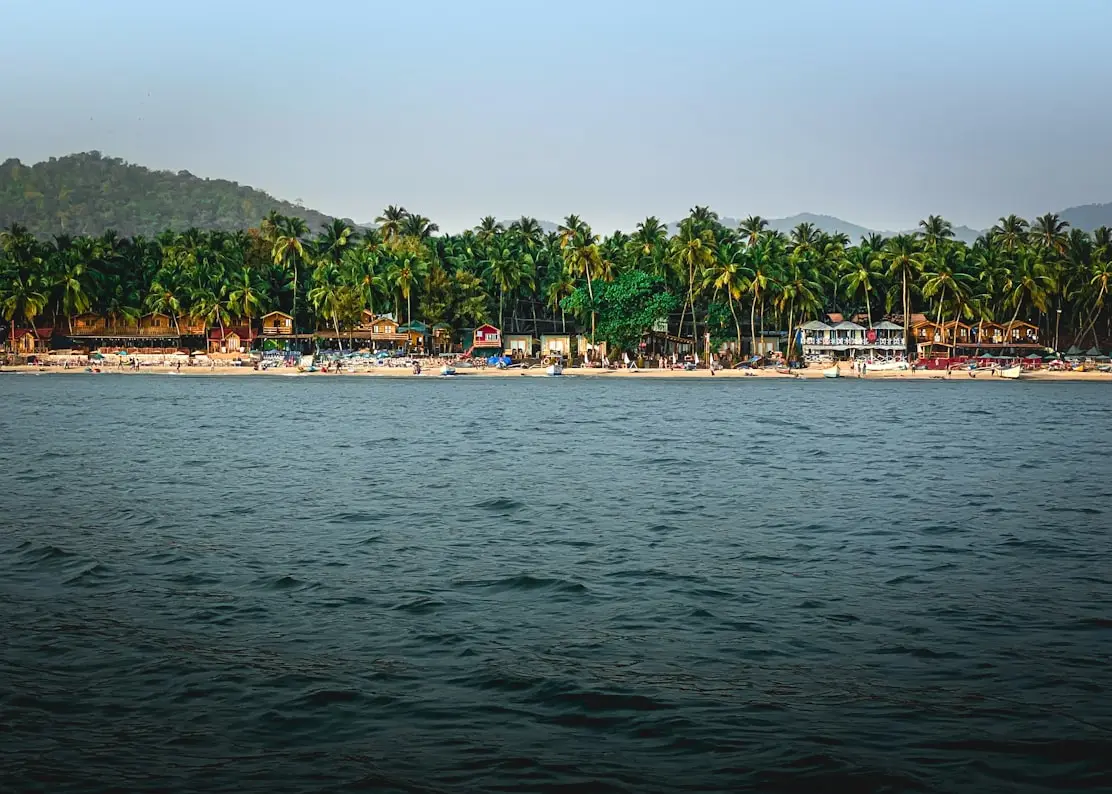
6. Palolem Beach, Goa
If you prefer a quieter atmosphere in South Goa, read our thorough Palolem Beach guide.
Location: Canacona taluka, South Goa. 65 km from Dabolim Airport, 38 km from Margao railway station.
Palolem is a 1.5 km crescent bay at the southern end of Goa's tourist belt, 8 km from the Karnataka border. The bay's geometry — two headlands enclosing the cove — creates calmer sea conditions than most North Goa beaches. This makes Palolem one of the better Goa beaches for swimming and kayaking. Kayaks are available for hire on the beach at Rs 200–300 per hour.
The beach has a row of wooden and bamboo huts available for rent from Rs 1,000–3,000 per night depending on season and proximity to the water. This format — sleeping directly on the beach — is what differentiates Palolem from the hotel-heavy North Goa scene. Silent noise parties (events where attendees wear wireless headphones) are a recurring feature of Palolem's nightlife, held at a beach venue.
Best time: October to February.
Ideal duration: 2–3 days. Combine with Agonda Beach (9 km north) for a quieter half-day.
Nearby attractions: Cotigao Wildlife Sanctuary (12 km, one of Goa's least-visited reserves), Butterfly Beach (accessible by boat from Palolem, 20 min), Cabo de Rama Fort (35 km).
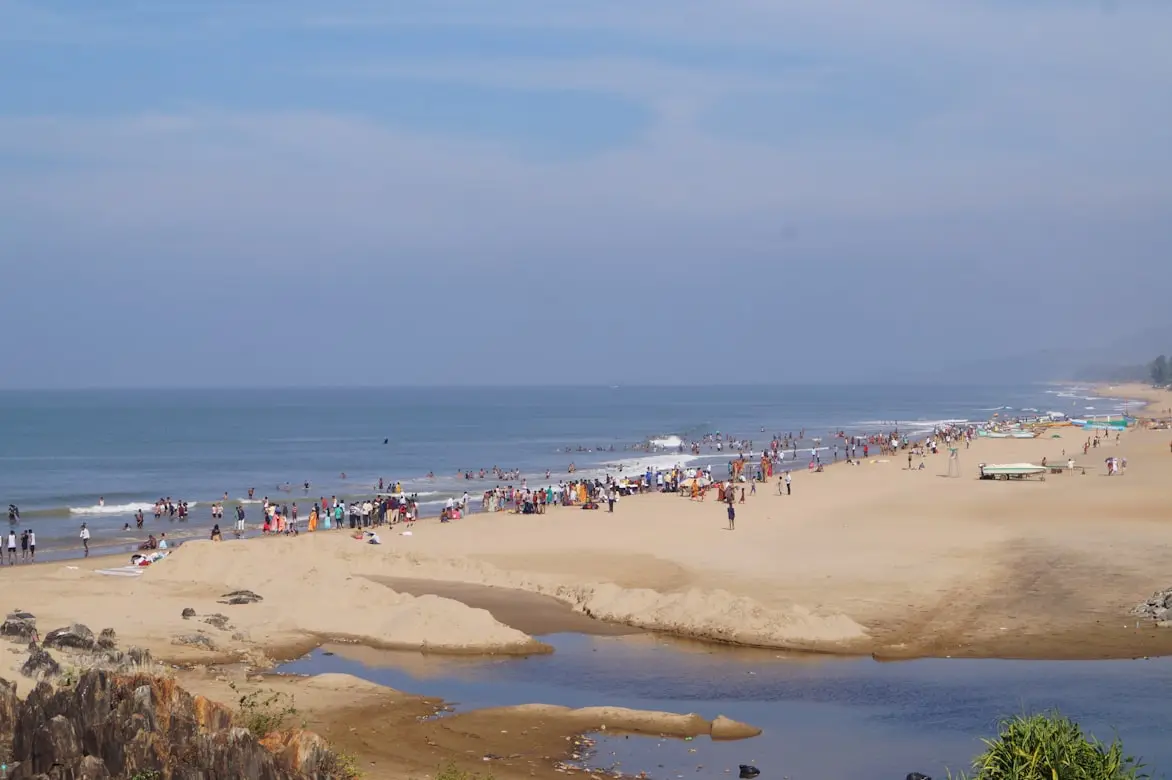
7. Gokarna Beach, Karnataka
Budget travelers and backpackers should check out our in-depth Gokarna Beach guide to discover its secluded coves.
Location: Uttara Kannada district, Karnataka. 58 km from Karwar, 59 km from Ankola railway station. Nearest airport: Dabolim, Goa (140 km).
Gokarna is a pilgrimage town around the Mahabaleshwar Temple that has also developed a parallel identity as a budget beach destination, primarily because its main beaches — Om Beach, Kudle Beach, Half Moon Beach, and Paradise Beach — are accessible only on foot or by boat and have no motor vehicle access. This structural feature has preserved a quieter character that's unusual among popular Indian beach destinations.
Om Beach is named for its two coves that form an Om shape when seen from above. The walk from Gokarna town to Om Beach is 3 km one way through rocky coastal terrain. Kudle Beach is 1 km before Om Beach on the trail. Half Moon and Paradise beaches require a further 2–4 km of walking beyond Om Beach, making them the quietest of the four.
Best time: October to March.
Ideal duration: 2–3 days.
Nearby attractions: Mahabaleshwar Temple in Gokarna town (significant Shiva temple, one of the sapta muksha kshetras), Mirjan Fort (30 km, Portuguese-era fort in good condition), Yana Caves (60 km, limestone rock formations).
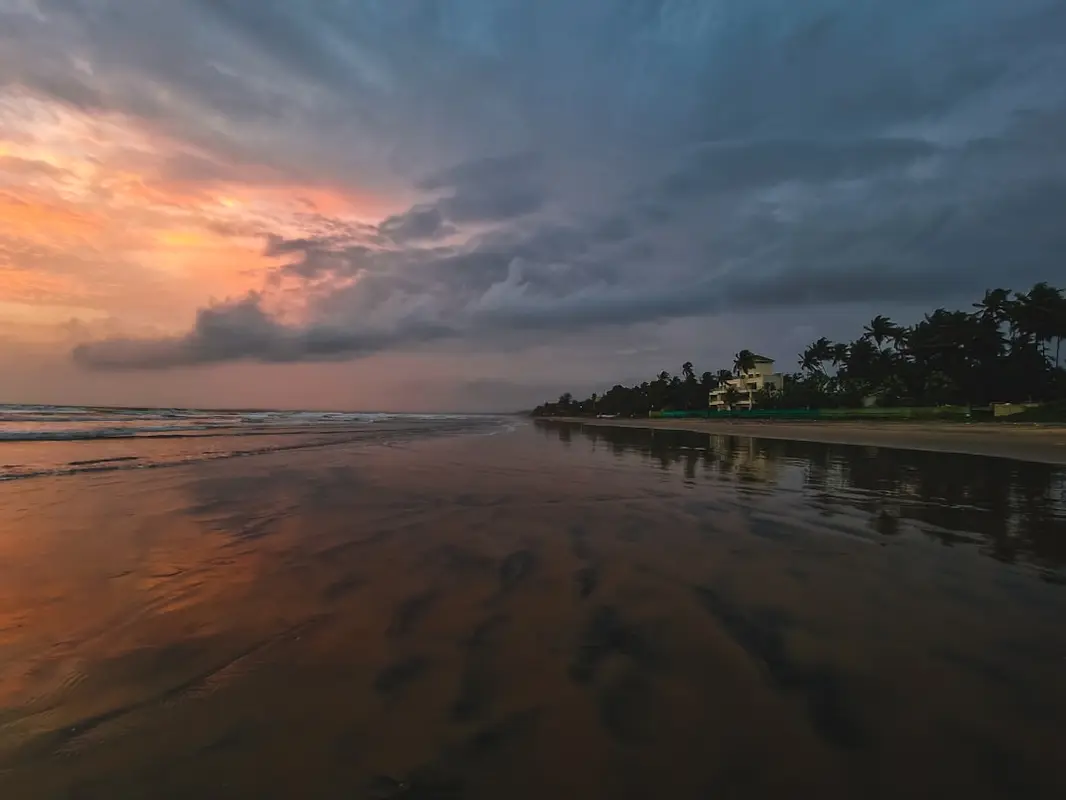
8. Tarkarli Beach, Maharashtra
For visitors interested in scuba diving and snorkeling, find more practical tips in our Tarkarli Beach guide.
Location: Malvan taluka, Sindhudurg district, Maharashtra. 520 km from Mumbai, 30 km from Kudal railway station.
Tarkarli is on the Karli river estuary where it meets the Arabian Sea, which creates a natural combination of backwater and beach. The water at Tarkarli is notably clear for a Maharashtra beach — visibility down to 8–12 metres in good conditions, making it one of the few places on the Maharashtra coast where snorkeling and scuba diving are worth doing.
The Sindhudurg Fort, built by Chhatrapati Shivaji Maharaj in 1664–67 on an island in the sea, is 5 km from Tarkarli and accessible by boat. It is one of the best-preserved sea forts in India and the primary historical attraction in the area. MTDC (Maharashtra Tourism Development Corporation) runs a beach resort at Tarkarli that is consistently booked out on weekends — reserve 3–4 weeks ahead.
Best time: November to March.
Ideal duration: 2–3 days.
Nearby attractions: Sindhudurg Fort (5 km by boat), Malvan town for Malvani seafood (10 km), Amboli Ghat (60 km, one of the wettest places in India with waterfalls during monsoon), Rock Garden at Vengurla (40 km).
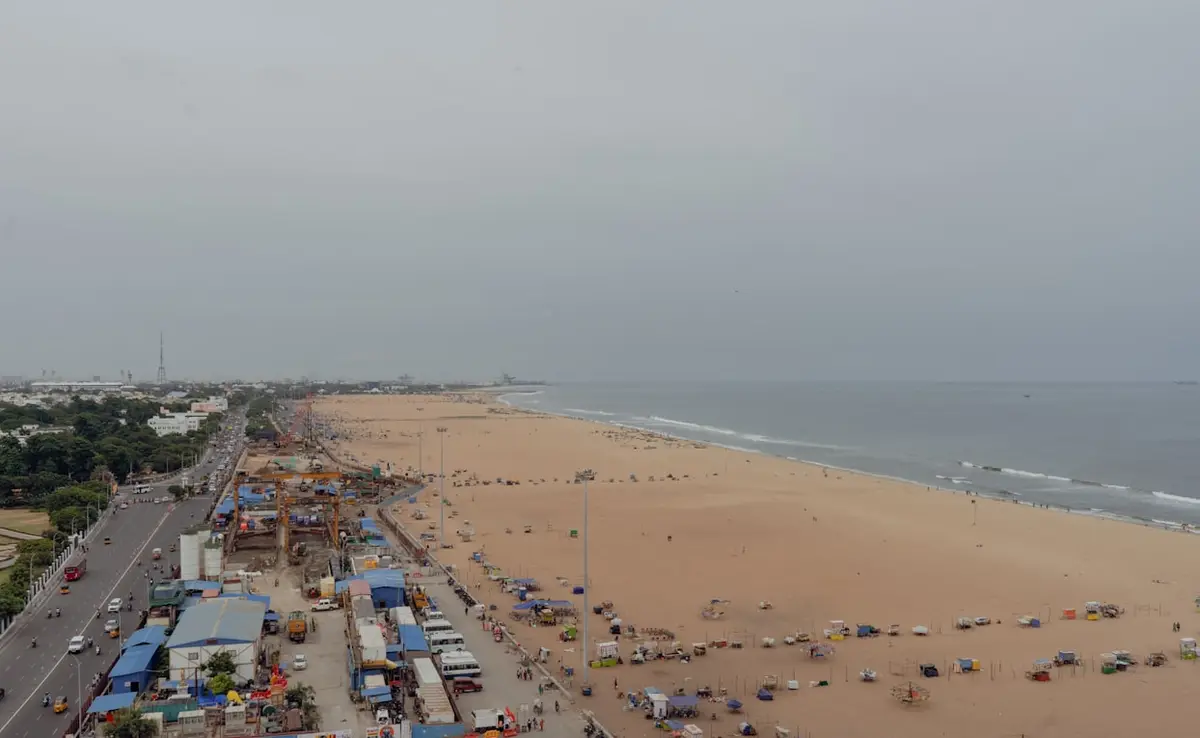
9. Marina Beach, Tamil Nadu
To learn more about the local culture along this massive coastline, explore our comprehensive Marina Beach guide.
Location: Chennai city, Tamil Nadu. Runs from near Fort St. George in the north to Besant Nagar in the south. Directly accessible from Chennai Central railway station (6 km) and Chennai Airport (16 km).
At 13 km, Marina Beach is the longest natural urban beach in India and the second-longest in the world. It functions as the primary public open space for Chennai's residents — the beach is used for morning walks, evening socializing, kite flying, political meetings, cricket, and as a food court (the beach road has cotton candy, sundal, fresh lime soda, and bajji vendors active from 4 PM to 10 PM). Entry is free, parking is available.
Swimming is officially prohibited at Marina Beach due to strong undertow and riptide currents — drowning incidents are reported regularly. The beach is not a water sports or swimming destination. What it offers is the scale and the urban energy — a 13 km walk from the Anna Salai end to Besant Nagar at sunrise is one of the more distinctive urban experiences in South India.
Best time: November to February, when Chennai temperatures drop to 22–28°C. March to June is hot (35–42°C).
Ideal duration: Half day to full day. Not an overnight destination in itself.
Nearby attractions: Fort St. George (2 km), Government Museum Chennai (5 km), Kapaleeshwarar Temple in Mylapore (7 km), Elliot's Beach in Besant Nagar (1 km from the southern end of Marina).
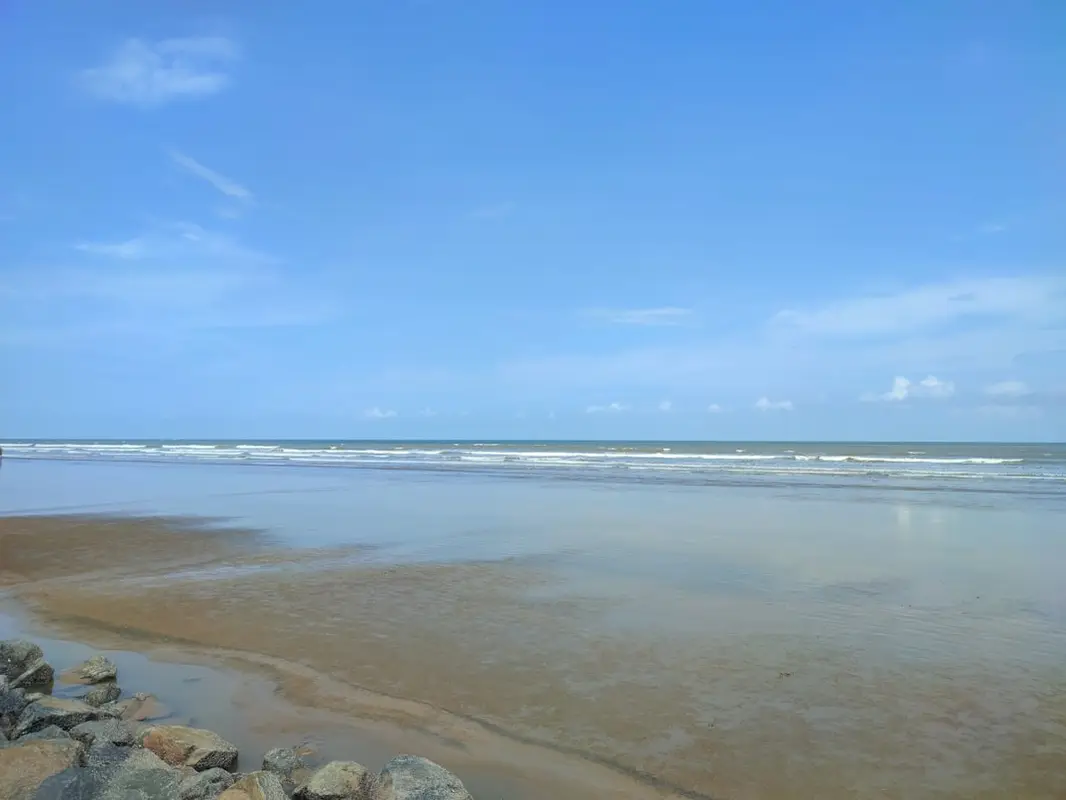
10. Digha Beach, West Bengal
If you are traveling from Kolkata, our dedicated Digha Beach guide breaks down everything you need to know for a quick weekend getaway.
Location: Purba Medinipur district, West Bengal. 185 km from Kolkata, approximately 4–5 hours by road or rail (Digha has a direct train from Howrah).
Digha is the most accessible beach destination for travelers from Kolkata and is one of the most visited beaches in eastern India. It is divided into Old Digha (the original settlement) and New Digha (more recently developed, 3 km from Old Digha), with Shankarpur (15 km) and Mandarmani (30 km) as quieter alternatives on the same coast.
The sea at Digha is brownish and not clear — this is characteristic of the Bay of Bengal coast in West Bengal due to river sediment. Swimming is possible but the beach is not suitable for snorkeling. The primary attraction is the sea air, the low-budget seafood (hilsa, crab, prawn at local eateries for Rs 150–400 a plate), and the ease of getting there from Kolkata on a weekend. Digha Sea Beach Marine Aquarium, Amar Abas Temple, and the Chandaneswar Shiva Temple (10 km) are the main non-beach draws.
Best time: October to March.
Ideal duration: 1–2 days. Best treated as a weekend trip from Kolkata rather than a destination requiring a longer stay.
Nearby attractions: Mandarmani Beach (30 km, wider and less crowded), Shankarpur (15 km, a fishing village with a quieter beach), Tajpur Beach (20 km, virtually undeveloped).
Quick Comparison Table For Best Time to Visit Beaches in India
| Beach | State | Best Time | Best For |
|---|---|---|---|
| Baga Beach | Goa | November–February | Nightlife, water sports, first-timers |
| Calangute Beach | Goa | November–February | Families, water sports |
| Radhanagar Beach | Andaman & Nicobar | November–April | Couples, peaceful trips, swimming |
| Varkala Beach | Kerala | October–March | Couples, solo travelers, yoga retreats |
| Kovalam Beach | Kerala | October–March | Families, swimming, Ayurveda |
| Palolem Beach | Goa | October–February | Couples, relaxed stays, kayaking |
| Gokarna Beach | Karnataka | October–March | Budget travelers, backpackers, peaceful |
| Tarkarli Beach | Maharashtra | November–March | Snorkeling, scuba, water sports |
| Marina Beach | Tamil Nadu | November–February | Families, evening walks, local culture |
| Digha Beach | West Bengal | October–March | Budget trips, families, weekend getaways |
Best Time to Visit Beaches in India
India's coastline faces two different monsoon systems, which means peak beach season varies by coast:
West Coast (Goa, Kerala, Karnataka, Maharashtra): The southwest monsoon hits the west coast from June through September, with Goa receiving approximately 2,500–3,000 mm and Kerala's coast receiving even more. Beach infrastructure closes down during this period and sea conditions make swimming unsafe. The season runs October–November (opening) through March–April. The peak for Goa is November–February. For Kerala, October–March.
East Coast (Tamil Nadu, Andhra Pradesh, West Bengal): The northeast monsoon affects the east coast from October through December. Chennai and the Tamil Nadu coast receive most of their annual rainfall in November–December. The practical beach season on the east coast runs January–May and September–October. Digha and Puri's off-season is June–September.
Andaman Islands: The monsoon affects the Andamans from May through October, with rough seas making ferry travel and water activities unsafe for significant stretches. The season is November–April.
Budget Travel Tips for Beach Trips
Book accommodation off-season: Beach hotels and resorts in Goa, Kerala, and Gokarna drop prices by 30–60% outside the November–February window. The shoulder months of October and early March have good weather with significantly lower rates.
Use government guesthouses: MTDC (Maharashtra), Kerala Tourism, and ATDC (Andaman Tourism) run well-located budget guesthouses at Tarkarli, Kovalam, and Havelock Island respectively. Rates are Rs 700–2,000 per room per night and quality is consistent. Book directly through state tourism websites.
Travel by train to coastal destinations: Sleeper class trains from major cities to beach destinations are vastly cheaper than flights. Mumbai to Malvan (for Tarkarli) by train and bus is Rs 300–500 versus Rs 3,000–6,000 for a flight to Goa and taxi south. Kolkata to Digha is under Rs 100 in second class. Thiruvananthapuram (for Kovalam and Varkala) is connected by overnight trains from Mumbai, Bangalore, and Delhi with sleeper fares of Rs 400–700.
Eat at local eateries, not beach-facing restaurants: A fish thali at a local joint in Varkala town costs Rs 100–150 versus Rs 400–600 at clifftop restaurants. Malvani seafood in Malvan town is cheaper than at Tarkarli resort restaurants. The food quality at local eateries is frequently better.
Avoid peak season travel to the Andamans: Flight prices from Chennai or Kolkata to Port Blair spike sharply from December 20 to January 5. Booking for early November or February reduces airfare by Rs 3,000–6,000 per person round trip while the weather and sea conditions remain good.
Ready to leave the lists behind and start planning? Head over to the free finder tool on our homepage to filter destinations by state and type, giving you personalized travel cards with direct booking options from Viator, GetYourGuide, and Klook.
Frequently Asked Questions
1. Which is the best beach in India for swimming and water clarity?
Radhanagar Beach on Havelock Island in the Andamans has the clearest water and the most consistently good swimming conditions among popular Indian beaches. The water visibility is 10–15 metres and the sea floor is sandy with a gradual slope. Palolem in South Goa is the best option on the mainland for calm, swimmable water due to its enclosed bay geometry. Tarkarli in Maharashtra has the best water clarity on the Maharashtra coast. Beaches on the West Bengal and Odisha coast (Marina, Digha, Puri) have poor water visibility due to river sediment and are not recommended for swimming quality.
2. Which Indian beach is best for a couple on a budget?
Gokarna in Karnataka is the most cost-effective beach destination for a couple wanting quiet, scenery, and a low daily spend. Accommodation near Om Beach runs Rs 600–1,500 per night for a basic room, food at beach shacks costs Rs 150–300 per meal, and there are no entry fees or expensive activities. Varkala in Kerala is a strong alternative — clifftop guesthouses are available from Rs 800–2,000 per night, and the setting is more distinctive than most budget beach options. Both destinations are accessible by train and require no flights for travelers from southern or western India.
3. Is it safe to swim at all Indian beaches?
No. Several popular beaches have strong undertow or riptide conditions that make them unsafe for swimming. Marina Beach in Chennai officially prohibits swimming. Anjuna and Vagator in North Goa have rougher seas and irregular currents. Baga and Calangute are generally monitored by lifeguards but conditions vary. Always check for red flag warnings posted by beach authorities — these indicate the sea is unsafe that day. Beaches with enclosed bays (Palolem, Radhanagar) are inherently calmer. On unfamiliar beaches, observe local swimmers before entering and stay within your depth.
4. Which is the best beach in India for a family trip with children?
Kovalam in Kerala is practical for families — the sea is monitored by lifeguards, the beach is gradual rather than sharply shelving, Ayurveda activities are available for adults while children use the beach, and Thiruvananthapuram city (16 km) has a zoo, museum, and cultural attractions for a combined trip. Calangute in Goa is the other practical family choice — the sheer density of restaurants, accommodation options, and activities accommodates varied needs across age groups. Radhanagar in the Andamans is excellent for families who can manage the flight to Port Blair, as the water is calm and the environment is genuinely different from a mainland beach.
5. When is the cheapest time to travel to Goa for a beach trip?
The cheapest time to visit Goa is September and early October, when the monsoon is ending. Hotel prices are 40–60% below peak rates, flights from Mumbai and Delhi cost Rs 2,000–4,000 return (versus Rs 8,000–20,000 around Christmas–New Year), and most shacks and restaurants reopen from late September. The compromise is that some beach infrastructure is still partially operational in early October and the sea can be choppy. By mid-October, conditions are consistently good. February is the second-best value window — crowds drop after the peak season, prices reduce by 20–30%, and the weather remains dry and pleasant through most of the month.