Dhuandhar Falls 2026 — Why Everyone’s Talking About It Now (Exact Costs, Crowd Warnings & Best Time)

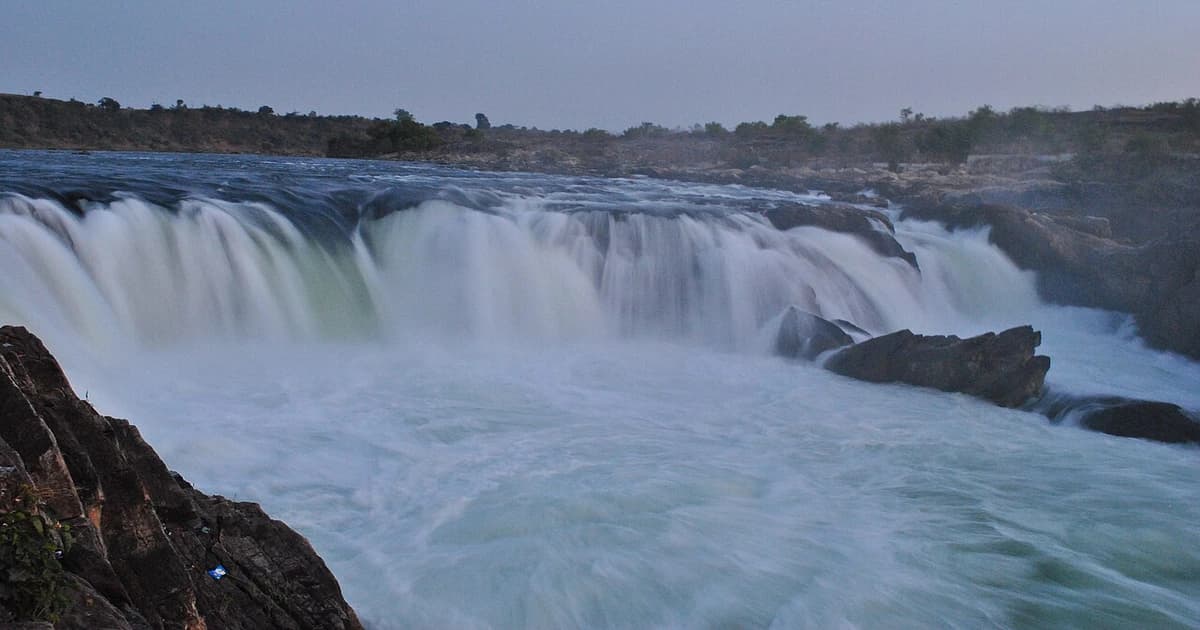
Why Dhuandhar Falls Feels Like a Scene Everyone’s Suddenly Noticing?
Dhuandhar Falls is suddenly back in conversations, but the reality on the ground hasn’t changed — most people still visit it the wrong way. They stand at the viewpoint, take a few photos and leave, missing the Marble Rocks boat ride that’s actually the highlight, underestimating weekend crowds that can stretch to 90 minutes, and overpaying for a trip that can easily be done in ₹600–900 if planned right. This guide breaks down exactly what to do, what to skip and how to experience Bhedaghat properly in 2026
🌧️ August 2026 Monsoon Update — What You Need to Know Before You Go
Updated third week of August 2026.
Dhuandhar Falls is visually at its absolute peak during the August monsoon. The Narmada river is swollen, creating a deafening roar and massive walls of mist that live up to its "smoke cascade" name. However, the monsoon significantly alters the on-ground experience at Bhedaghat.
Here is exactly what to expect if you visit this month:
- Marble Rocks Boat Ride Status: Currently suspended. Boating in the Narmada river gorge is halted during peak monsoon for safety reasons, as the water level often submerges the gorge walls. It typically resumes in mid-October. Do not plan a trip right now if the boat ride was your main goal.
- Ropeway Operations: Running on a strictly weather-dependent basis. On clear days, it offers the most spectacular aerial view of the swollen falls. If there is heavy rain or strong wind, operations are halted immediately.
- Photography & Viewing: The mist generated by the falls in August is so thick that it acts like light rain. If you bring a DSLR, you must have a weather-sealed body or a rain cover. The barricades near the main viewpoint are constantly wet and slippery.
- Safety Warning: The marble rocks surrounding the viewing areas become extremely treacherous when wet. Wear high-grip shoes; standard sneakers or sandals are a massive slipping hazard here during the monsoon.
- Crowd Distribution: Because the boat rides are closed, 100% of the visitors are concentrated at the main viewpoints and the ropeway lines. Weekend crowds (especially around the August 15th holiday period) can make the viewpoints feel claustrophobic.
Our Official August 2026 Recommendation: If you are coming solely for the sheer, terrifying power of the waterfall, August is visually the best time. Go on a weekday morning strictly before 9 AM. If you want the complete, relaxed Bhedaghat experience (including the iconic boat ride and exploring the marble gorges), push your trip to November.
How to Reach Dhuandhar Falls from Jabalpur
Bhedaghat is 25 km from Jabalpur city center — the drive takes 40–55 minutes depending on traffic near the city outskirts.
By bus: MPSRTC buses run from Jabalpur's Gwari Ghat bus stand to Bhedaghat regularly from early morning. Fare is Rs 25–35 per person one way. Journey time is approximately 50–60 minutes. Buses drop at Bhedaghat main chowk, 500 metres from the falls entrance road. This is the cheapest option and reliable on weekdays — on October and November weekends, buses run full and frequency drops.
By auto-rickshaw: Shared autos from Jabalpur's Sadar area charge Rs 50–80 per person to Bhedaghat. Private autos (full vehicle hire for the day, return trip included) cost Rs 400–600. The private auto option is worth it for couples — it removes the dependency on return bus timings and allows you to leave when the falls are getting crowded rather than waiting for a bus.
By cab: Ola and Uber operate in Jabalpur. A one-way cab to Bhedaghat costs Rs 350–500. For a full day trip with waiting, pre-booking a cab for Rs 700–1,000 return is the most convenient option for first-time visitors.
From other cities: Jabalpur Junction is well-connected to Delhi (Mahakoshal Express, 13–14 hours), Mumbai (Narmada Express, 15–16 hours), and Bhopal (Jabalpur Shatabdi, 3 hours). From the station, take an auto or cab to Bhedaghat directly.
Quick Facts
| Factor | Details |
|---|---|
| Location | Bhedaghat, Jabalpur district, Madhya Pradesh |
| Distance from Jabalpur | 25 km |
| Falls height | 30 metres |
| Ropeway cost | Rs 95 per person (return) |
| Marble Rocks boat ride | Rs 100–200 per person |
| Full day budget per person | Rs 600–900 |
| Best time | October to March |
| Avoid | July–August (dangerous water levels) |
| Nearest airport | Jabalpur Airport (Dumna), 20 km from city |
| Nearest railway station | Jabalpur Junction, 25 km from Bhedaghat |
| Women's safety rating | 8/10 daytime, avoid after 6 PM |
| Entry fee to falls viewpoint | Free |
| Marble Rocks Ghat entry | Rs 20 per person |
What to See and Do — in the Right Order
The Dhuandhar Waterfall
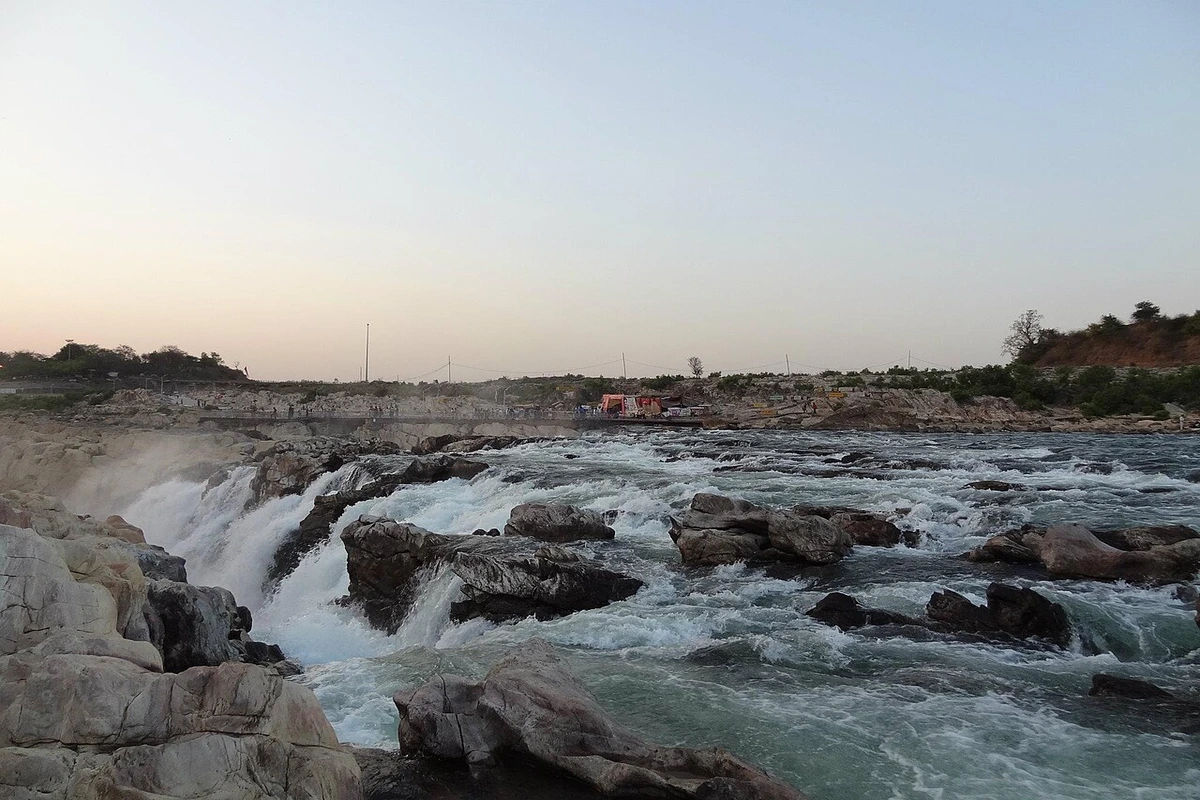
If you want to know more about the viewpoints and timing to catch the best mist, read our detailed Dhuandhar Falls guide.
Dhuandhar means "smoke cascade" in Hindi — the name describes exactly what happens when the Narmada river, 300 metres wide upstream, compresses into a 30-metre gorge at Bhedaghat and drops 30 metres over black marble rock. The force of the water creates a permanent mist cloud — the "dhuandh" (smoke) — that is visible from 200 metres away on clear days and coats everything near the viewpoint in fine spray.
The falls are accessible from two viewing platforms on the main promenade — an upper platform that gives the widest angle of the full drop, and a lower platform that puts you close enough to feel the mist. Both are free to access and involve no steps beyond the flat promenade walk. The viewpoint area is well-maintained — concrete railings, clean pathways, a row of snack stalls and souvenir shops along the approach road.
The best position for the falls is the lower platform on the eastern bank in the morning — the sun angle from 8–10 AM illuminates the mist and the white water against the black marble gorge walls.
The Ropeway — Honest Assessment
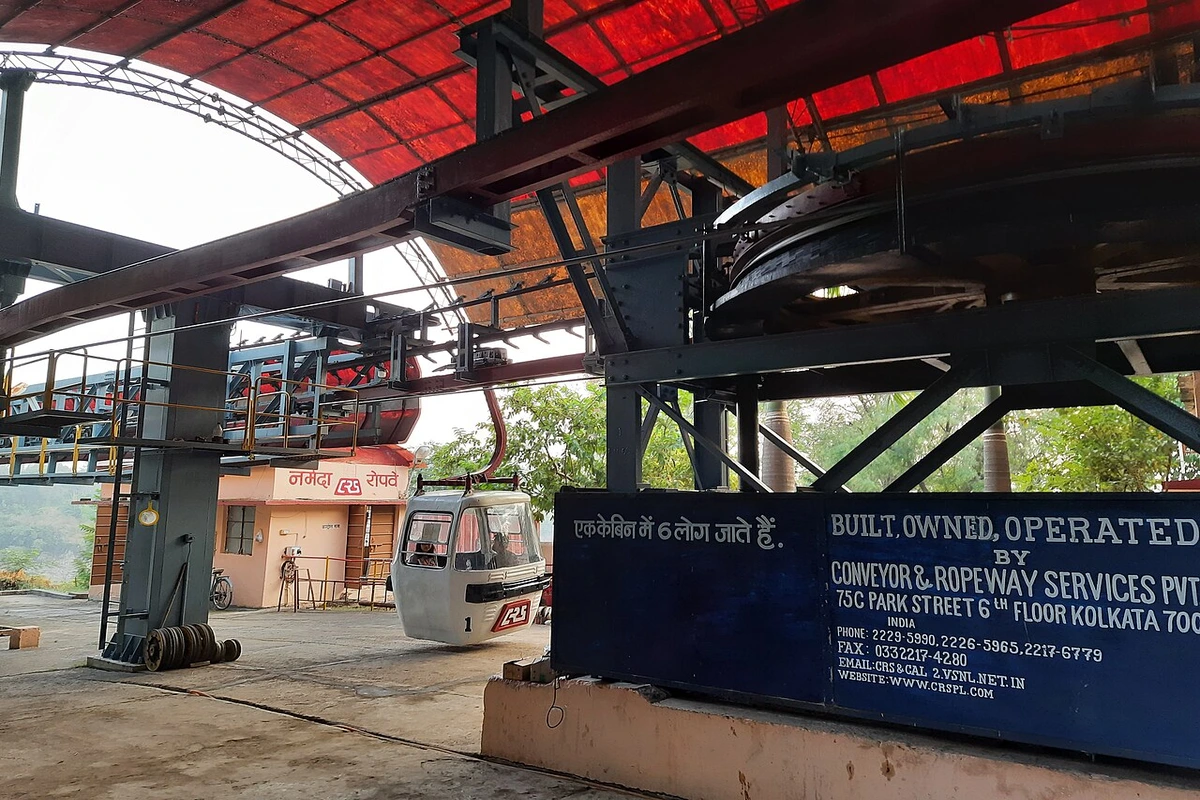
A cable car crosses the Narmada gorge directly above the falls, operated by MP Tourism. The fare is Rs 95 per person return. The crossing takes approximately 4 minutes one way.
Is it worth it? For the view, marginally — you get a direct overhead perspective of the full falls width and the gorge below, which is not available from the ground viewpoints. For children, it is a genuine highlight. For adults visiting without children, the viewpoints on the ground are adequate and the Rs 95 is not the issue — the 30–60 minute queue on weekends is. On weekdays before 9 AM, the queue is under 10 minutes and the ropeway is worth doing. On October and November weekends, factor in a 45–90 minute wait and decide accordingly.
Operating hours: 8 AM to 6 PM. Closed on maintenance days — confirm locally.
Marble Rocks Boat Ride — The Part Most Visitors Skip
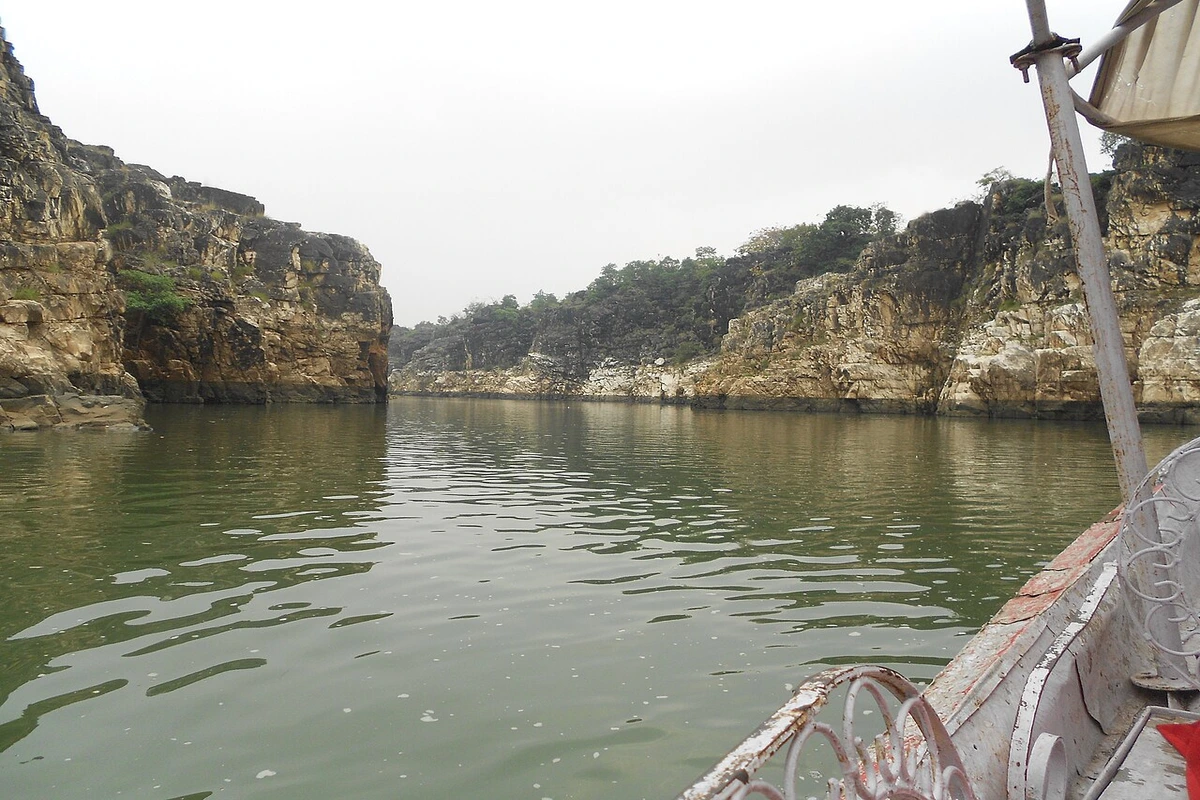
One kilometre upstream from Dhuandhar, the Narmada flows between 20-metre cliffs of white, grey, and black marble — a 3 km stretch called Marble Rocks (Bhedaghat literally means "marble gorge"). Government boat rides operate from the Marble Rocks Ghat, taking visitors through the gorge between the marble cliff walls. This is the experience most Dhuandhar visitors miss by spending all their time at the falls viewpoint and leaving.
Boat details:
- Ghat entry: Rs 20 per person
- Boat fare: Rs 100–150 per person (government boats, seat in shared boat with 8–12 passengers), Rs 500–800 for a private rowing boat
- Journey: 30–45 minutes, covers approximately 1.5 km into the gorge and returns
- Best time: Early morning for softer light on the marble, or evenings when the white marble catches the last sun
The marble cliff walls change colour with the angle of light — white in direct morning sun, grey-blue in cloud, almost pink at sunset. The Chausath Yogini Temple (a circular 10th-century temple with 64 Yogini figures, one of only four surviving circular temples in India) sits on a hill above the Ghat and is worth the 100-step climb — 15 minutes, free entry. It is one of the more significant medieval temple sites in central India and almost entirely overlooked by visitors focused on the falls.
Exact Cost Breakdown — Full Day Trip Per Person
| Expense | Budget Option | Mid-Range Option |
|---|---|---|
| Jabalpur to Bhedaghat transport | Rs 30–35 (bus) | Rs 200–250 (shared cab) |
| Return transport | Rs 30–35 (bus) | Rs 200–250 (shared cab) |
| Marble Rocks Ghat entry | Rs 20 | Rs 20 |
| Government boat ride | Rs 100–150 | Rs 150 |
| Ropeway (return) | Rs 95 | Rs 95 |
| Chausath Yogini Temple entry | Free | Free |
| Meals (breakfast + lunch at local dhabas) | Rs 150–250 | Rs 300–500 |
| Snacks and water at falls | Rs 50–100 | Rs 100–150 |
| Miscellaneous (souvenir, parking if driving) | Rs 50–100 | Rs 100–200 |
| Total per person | Rs 525–785 | Rs 1,165–1,615 |
Realistic per-person budget: Rs 600–900 covers a comfortable full day using the bus for transport, doing both the ropeway and boat ride, and eating at local stalls. Private cab from Jabalpur pushes this to Rs 1,200–1,400 per person for a couple.
For travelers looking to plan their next long weekend, check out our highly requested Andaman & Nicobar 3-day itinerary.
Crowd Warnings and Best Time to Visit
Monthly Guide
October to December is peak season — the post-monsoon Narmada is at a good flow level, the mist effect is strongest, and the weather is comfortable at 22–30°C. The downside is that these three months are also the most crowded. October and November weekends draw tour groups from Jabalpur, Bhopal, Nagpur, and Raipur simultaneously. The ropeway queue on a November Sunday can reach 90 minutes. The Marble Rocks Ghat boat queue adds another 30–45 minutes.
January to March is the sweet spot for independent travelers — crowds thin significantly after New Year, the weather is cool (12–22°C in January–February), and the falls maintain a good flow level. March is the last comfortable month before summer heat builds.
April to June — temperatures in Bhedaghat reach 38–43°C. The falls are accessible but the experience is uncomfortable. Water levels in the Narmada drop significantly by May, reducing the mist effect.
July to August — avoid entirely. The Narmada during peak monsoon rises to dangerous levels at Bhedaghat — the gorge walls become submerged, boat rides are suspended, and the viewpoint railings are sometimes within metres of the swollen river. MP Tourism and local authorities issue periodic closure notices. The falls volume is at maximum but access is restricted for safety reasons. Even when open, the surrounding roads from Jabalpur are susceptible to waterlogging.
September — transitional. The monsoon is winding down, the falls are at near-peak volume, and crowds have not yet arrived. A good option for travelers who want full flow with manageable crowds, accepting occasional rain.
The Weekday Morning Rule
The single most effective way to manage Dhuandhar crowds at any time of year: arrive by 8:30 AM on a weekday. The falls open at 8 AM. Between 8–9:30 AM on Tuesday through Friday, you will have the viewpoints, ropeway, and boat ghat largely to yourself. By 11 AM, day-trippers from Jabalpur arrive in volume. By 1 PM on weekends, it is at full capacity.
Where to Stay — Hotel Picks for Every Budget
Staying in Bhedaghat (Near the Falls)
Budget: Hotel Marble Rocks, Bhedaghat Located 300 metres from the falls entrance road, Hotel Marble Rocks is the closest budget option to the falls themselves. Basic rooms with private bathroom, hot water on request, functional for a one-night stay. Rates: Rs 600–1,200 per night. Book directly by phone — the property is not consistently listed on OTAs and direct booking gets you a better room selection. Useful if you want to be at the falls at 8 AM without a 25 km drive from Jabalpur.
Mid-range: MP Tourism's Marble Rocks Hotel, Bhedaghat Run by Madhya Pradesh Tourism, this is the best-located mid-range option — directly on the Marble Rocks Ghat road with Narmada views from some rooms. Rates: Rs 1,800–3,200 per night. Book at mptourism.com. Reliable quality, restaurant on-site, advance booking essential for October–December weekends.
Staying in Jabalpur City (Better Facilities, More Options)
Budget: Hotel Kalchuri Residency, Jabalpur Near Jabalpur railway station, Rs 900–1,800 per night. Standard budget city hotel — clean, reliable hot water, good base for the Bhedaghat day trip. Convenient for train arrivals. Book at Booking.com or call direct.
Mid-range: Hotel Satya Ashoka, Civil Lines, Jabalpur Jabalpur's Civil Lines area is the best-maintained part of the city. Hotel Satya Ashoka offers AC rooms from Rs 2,200–4,000 per night, restaurant, and reliable service. Suits couples wanting a comfortable base with easy cab access to Bhedaghat. Book at booking.com/hotel/in/satya-ashoka-jabalpur
Premium: Narmada Jacksons Hotel, Jabalpur The best full-service hotel in Jabalpur — heritage property run by the Jacksons group, Rs 4,500–8,000 per night depending on season. Outdoor pool, multi-cuisine restaurant, banquet facilities. The go-to option for travelers who want reliable premium quality in a city with limited upscale inventory. Book at narmadajacksons.com
If you're eager to find less-crowded spots, discover pristine coastlines in our guide to the top 10 hidden beaches in India.
Women's Safety Assessment
Rating: 8/10 during daytime
Bhedaghat is a government-maintained tourist site with a consistent police and MP Tourism staff presence along the main promenade, Marble Rocks Ghat, and ropeway area. Solo women and couples report no specific safety concerns during daytime visits. The site is compact — the main viewpoint, ropeway, and boat ghat are all within 1 km of each other — which limits isolated stretches.
Practical notes:
- The main promenade and ghat area are safe and well-monitored until closing time (6 PM)
- The Chausath Yogini Temple path (100 steps off the main ghat) is isolated — visit as part of a group or with a companion rather than alone
- After 6 PM, the falls area empties rapidly and the approach road has limited lighting — plan to leave by 5:30 PM
- For transport back to Jabalpur, use a pre-booked cab or pre-arranged auto rather than flagging down vehicles after dark
- The Bhedaghat market area (souvenir shops along the approach road) is active until 7–8 PM and safe for browsing
If you're interested in popular coastal getaways, you might enjoy reading our guide on the best beaches in India to plan your next vacation.
Frequently Asked Questions
1. Is Dhuandhar Falls worth visiting or is it overhyped?
Dhuandhar is worth visiting — but the experience depends entirely on how you time it and what you combine it with. The falls themselves deliver the smoke-mist effect that makes them famous, and the Marble Rocks gorge boat ride upstream is one of the more genuinely distinctive experiences in central India. What is overhyped is the "hidden gem" framing — it is a major MP Tourism site with concrete viewpoints, a ropeway, and weekend crowds that rival popular Rajasthan forts. Visiting on a weekday morning in January or February gives you 80% of the visual impact at 20% of the crowd level. Visiting on a November Sunday gives you the same visual impact with 90-minute queues.
2. How do I reach Bhedaghat from Jabalpur — what is the cheapest option?
The cheapest option is the MPSRTC bus from Gwari Ghat bus stand in Jabalpur to Bhedaghat — Rs 25–35 per person one way, journey time 50–60 minutes. For couples or small groups, a shared auto from Sadar area at Rs 50–80 per person is faster and only marginally more expensive. Private cab for the full day (Rs 700–1,000 return) is the most convenient option and splits well between two people.
3. Can you do Dhuandhar Falls and Marble Rocks in one day?
Yes — and you should. Both are at the same location in Bhedaghat. The Dhuandhar viewpoints and ropeway are at the downstream end. The Marble Rocks Ghat and boat ride are 1 km upstream, a 15-minute walk or Rs 30–50 auto ride along the road. A full visit covering both takes 3–4 hours at a comfortable pace. The logical sequence is: Marble Rocks boat ride first (best light in the morning), then walk downstream to Dhuandhar, do the ropeway, spend time at the viewpoints, and finish with lunch at the dhaba stalls near the falls entrance. The Chausath Yogini Temple at the top of the Ghat can be added in 30 minutes between the boat ride and the walk to the falls.
4. What is the entry fee for Dhuandhar Falls?
The falls viewpoint promenade is free to enter. There is no gate or ticket at the main falls area. The ropeway costs Rs 95 per person return (operated by MP Tourism). The Marble Rocks Ghat charges Rs 20 per person entry. The government boat ride through Marble Rocks gorge costs Rs 100–150 per person in a shared boat. Private rowing boats are available for Rs 500–800 for the full boat. Total entry and activity cost if you do everything: Rs 215–265 per person (ghat entry + ropeway + shared boat).
5. What is the best month to visit Dhuandhar Falls?
November is the best single month — the post-monsoon Narmada is at a good flow level for the mist effect, the weather is comfortable at 20–28°C, and visibility is clear. The downside is that November weekends are heavily crowded. If crowd avoidance is a priority, January and February offer better conditions for independent travelers: lower footfall, cool and clear weather (12–22°C), and a falls flow level that is still strong enough for the signature smoke effect. October has the highest flow but also the highest crowds of the season.
Planning One of These Trips?
BestNear has complete destination guides for many of the places covered in this blog — with honest assessments, real budget breakdowns, day-by-day itineraries, and safety information: