Shillong Travel Guide 2026: Trip Plan, Real Costs & Is It Safe to Visit?

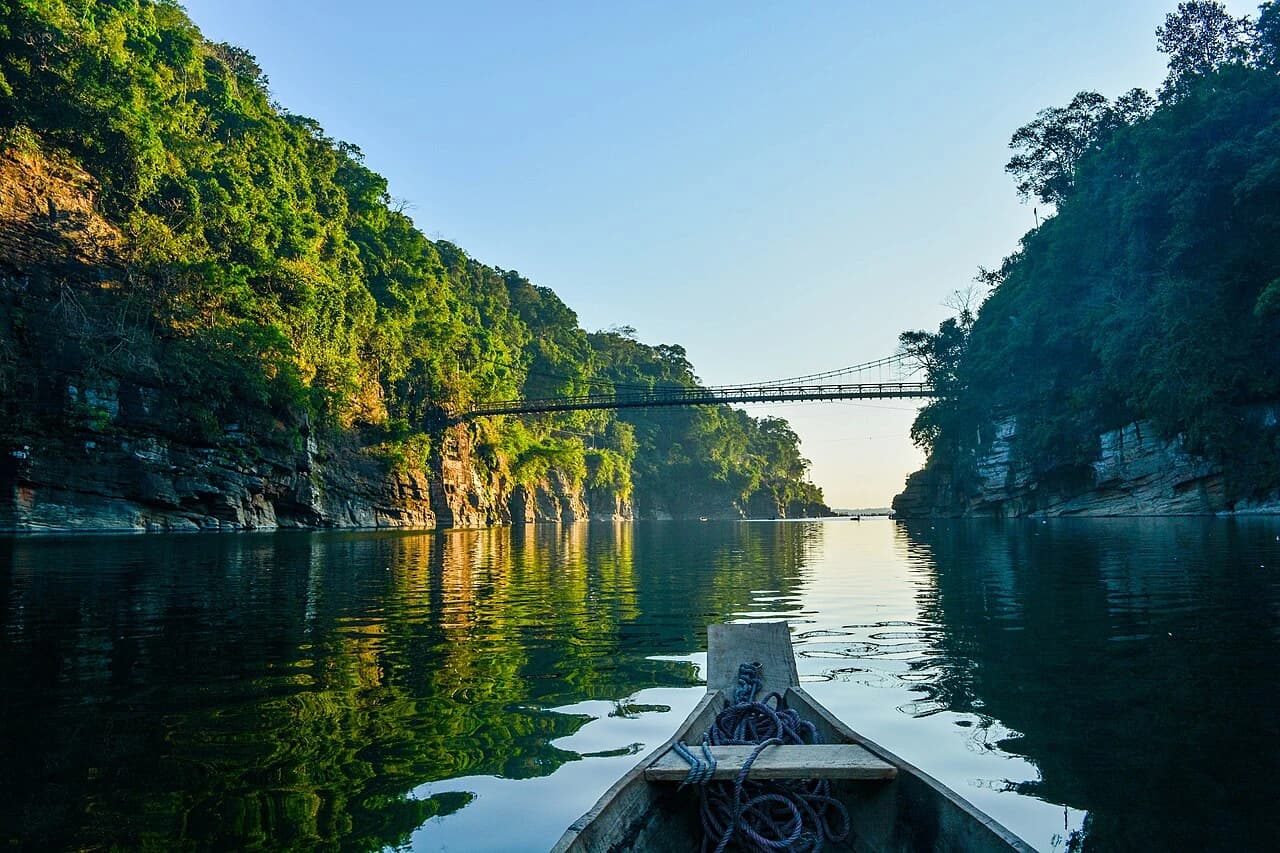
⛅ Late August & September 2026 Update — The Post-Monsoon Window
Updated fourth week of August 2026.
As Meghalaya transitions out of its extreme monsoon months, late August and September offer a unique travel window. The state is exceptionally lush, the major waterfalls in Cherrapunji are still flowing powerfully, and the extreme winter crowds haven't arrived yet.
Here is what you need to know if you are visiting right now:
- Dawki & Umngot River: Do not expect the famous "crystal clear boat floating in the air" photos right now. The river is still recovering from monsoon runoff and remains somewhat muddy. The water typically clears up by late October or November.
- Living Root Bridges (Nongriat): The trek is currently open, but the 3,000 stone steps are incredibly slippery due to residual moss and moisture. Trekking poles and shoes with aggressive grip are absolutely mandatory this month.
- Cherrapunji Waterfalls: This is the absolute best time to see Nohkalikai and Seven Sisters Falls at their peak volume before they begin drying up in the winter months.
- The Guwahati-Shillong Highway: Landslides on NH-6 are being cleared rapidly, but expect slight delays on the 3-hour drive from Guwahati airport to Shillong city.
Our Shoulder Season Recommendation: September is an excellent time for nature lovers who prioritize massive waterfalls and greenery over the clear waters of Dawki. Bring high-quality rain gear, as sudden showers are still common.
Shillong Travel Guide 2026 — Is the Hype Justified? Honest Costs, Crowd Reality and What No One Tells You
If you want to know more about the local culture and the best seasons to visit the capital, read our complete Shillong guide.
Shillong searches are up 828% in 2026. Before you book flights to Guwahati and assume you've discovered Northeast India, read this first — because the gap between what travel reels show and what you actually experience in Shillong is significant enough to affect your decision. This Shillong travel guide for 2026 covers what the destination actually delivers for young couples and solo travelers from Delhi, Mumbai, and Bangalore: the Guwahati–Shillong transport reality nobody explains, exact costs from Rs 18,000 for a 4-day trip, crowd levels by month, a women's safety rating for solo female travelers, hotel picks with booking details, and an honest answer on whether Dawki's viral crystal-clear river is worth the extra day.
The Hype Assessment — Is Shillong Worth It in 2026?
Let's answer this directly before the itinerary.
What Shillong actually is: A hill city at 1,496 metres in Meghalaya — India's "Scotland of the East" tag is geographically accurate in the sense that it rains a great deal and the hills are green. It is a functioning state capital with a population of 143,000, active music and café culture, a surprisingly good food scene, and proximity to some of the most unusual natural formations in India (living root bridges, the Umngot river at Dawki, Mawsynram caves).
What the reels are selling: An empty, magical hillside with crystal rivers and no other tourists. This version of Shillong exists — in October and November, on weekdays, if you get to Dawki before 9 AM.
The 2026 crowd reality: The 828% search surge is translating into actual footfall. Dawki on weekends from November to February now has boat queues of 45–90 minutes. Police Point and Elephant Falls in Shillong see weekend crowds comparable to Mussoorie viewpoints. The living root bridges at Nongriat require a 3,000-step descent — that is still filtering casual tourists — but the trailhead at Tyrna now has food stalls, parking fees, and guided tour groups.
The verdict: Shillong and Meghalaya are genuinely worth visiting in 2026. The landscape is real. The Umngot river at Dawki is one of the most visually distinctive places in India. But the "hidden gem" framing is 2–3 years out of date. Go with accurate expectations and time your visit for October–November or February–March to avoid the peak crowd window.
The Guwahati Connection — What Nobody Explains Clearly
This is the single most important practical section in this guide. Shillong has no airport and no railway station.
Every traveler flying from Delhi, Mumbai, or Bangalore lands at Lokpriya Gopinath Bordoloi International Airport in Guwahati, Assam — which is in a different state, 100 km from Shillong, and requires an additional 2.5–3.5 hour road journey through the Meghalayan hills.
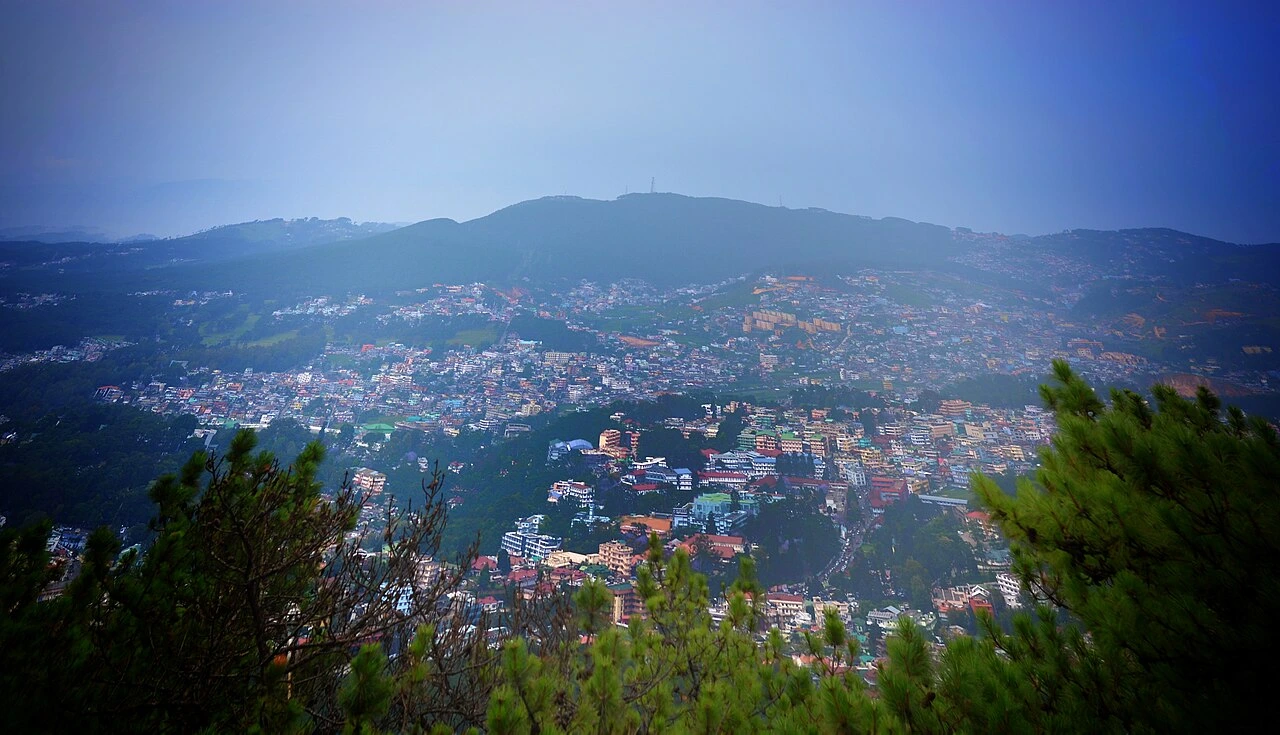
Your options from Guwahati Airport to Shillong:
Shared sumo/taxi from Airport taxi stand:
- Cost: Rs 250–350 per seat
- Journey time: 2.5–3.5 hours depending on traffic at Jorabat (the Assam-Meghalaya border junction — known for significant jams on weekends)
- Frequency: Regular departures from early morning to evening
- Comfort: Shared with 6–8 passengers, not suited for large luggage
- Verdict: Cheapest option, fine for solo travelers
Private cab (pre-booked through hotel or operator):
- Cost: Rs 1,800–2,800 one way for the full vehicle
- Journey time: 2.5–3 hours
- Book through: Your Shillong hotel, or platforms like Savaari, MakeMyTrip cabs, or local Meghalaya operators
- Verdict: Best option for couples or those with luggage. Pre-booking from Delhi before landing saves 30–45 minutes of negotiation at the airport
Meghalaya Transport Corporation (MTC) bus:
- Cost: Rs 120–150 per person
- Departs from: Paltan Bazaar bus stand in Guwahati city (not the airport — requires a separate Rs 400–600 auto or cab to reach from the airport)
- Journey time: 3–4 hours
- Verdict: Only useful if you are already in Guwahati city, not arriving at the airport
Flight to Umroi Airport, Shillong (Shillong Airport):
- IndiGo operates limited flights from Kolkata to Shillong's Umroi Airport (30 km from city). Not operational from Delhi, Mumbai, or Bangalore as of early 2026.
- Check current status — services have been intermittent.
The Jorabat Traffic Warning
The Jorabat junction on NH 40 (Guwahati–Shillong highway) is where the road from Guwahati narrows before the Meghalaya hills. On Friday evenings and Saturday mornings during peak tourist season (November–February), this junction can add 1–1.5 hours to your journey. If flying in on a Friday evening, consider staying a night in Guwahati and driving to Shillong Saturday morning after 10 AM, or book a very early morning cab.
If you're tired of just reading lists, try the free destination finder tool on our homepage. By simply entering your preferred state and travel style, you can explore personalized recommendations complete with actual booking options from trusted platforms like Viator, GetYourGuide, and Klook.
Quick Overview — Shillong 2026
| Factor | Details |
|---|---|
| Nearest airport | Guwahati (100 km, 2.5–3.5 hrs by road) |
| Best time to visit | October–November, February–March |
| Avoid | June–August (monsoon — Cherrapunji area gets 12,000 mm) |
| Ideal duration | 4 days (Shillong 2 days + Cherrapunji day trip + Dawki day trip) |
| Budget per person (4 days, ex-flights) | Rs 8,000–16,000 |
| Mid-range per person (4 days, ex-flights) | Rs 18,000–32,000 |
| Women's safety rating | Good in Shillong city; moderate caution for late nights |
| Permit required | No permit for Indian nationals in main Shillong/Cherrapunji/Dawki areas |
Women's Safety Rating — Honest Assessment
Shillong city: 8/10 — Shillong has a distinct advantage over most Indian hill cities in terms of safety for women. The Khasi community, which is the dominant indigenous group in Meghalaya, is matrilineal — property, family names, and community leadership pass through women. This cultural context produces a different street dynamic than most Indian cities: solo women travelers report feeling significantly less harassed in Shillong's markets, cafes, and streets than in comparable Indian hill stations.
Practical notes:
- Police Bazaar area (the main commercial hub) is well-lit and active until 9–10 PM — safe to walk in pairs or groups
- Late night (post-11 PM) movement outside the Police Bazaar and Laitumkhrah areas is not advisable for solo women, as with most Indian cities
- Cherrapunji day trip: comfortable for solo women during the day; the trek to Nongriat (living root bridges) should be done with at least one companion
- Dawki: the riverbank is commercial and daytime-only — no specific safety concerns
- Hire a fixed cab or use a pre-booked vehicle for evening travel rather than flagging down unknown vehicles
- Mawsynram caves area: very few tourists, isolated location — go with a group or guided tour
Recommended for solo female travelers: Yes, with the standard precautions applicable to any Indian hill region.
4-Day Itinerary — Shillong, Cherrapunji and Dawki
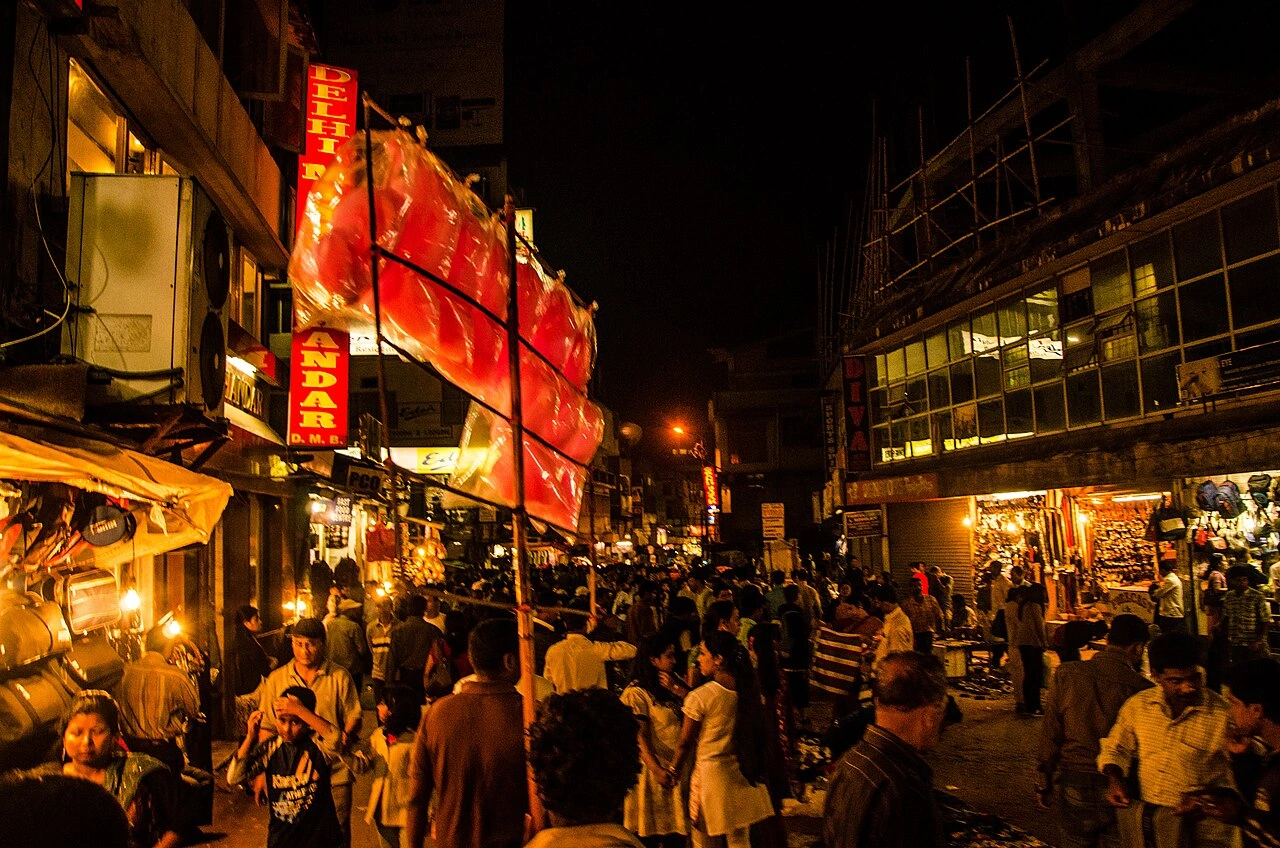
Day 1 — Arrive Guwahati, Drive to Shillong, Police Bazaar Evening
Land at Guwahati. Pre-booked cab to Shillong (2.5–3 hrs). Check in by early afternoon.
Afternoon: Ward's Lake (1 km from Police Bazaar) — a landscaped lake in the center of Shillong with paddle boating (Rs 50–80 per person) and the surrounding Shillong Botanical Garden. Manageable 1-hour visit. Lady Hydari Park (adjacent, Rs 10 entry) has a small zoo and gardens — worth 45 minutes.
Evening: Police Bazaar is Shillong's commercial heart — a compact, walkable area with Meghalayan food stalls, local music (Shillong has an unusually active live music scene by Indian small-city standards — the Lou Majaw legacy and Guitar Festival culture are real), and the best concentration of restaurants in the city. Try jadoh (Khasi rice cooked with pork) at a local dhaba on Police Bazaar lanes — Rs 80–120 per plate.
Overnight: Shillong.
Day 2 — Shillong City: Elephant Falls, Shillong Peak, Don Bosco Museum
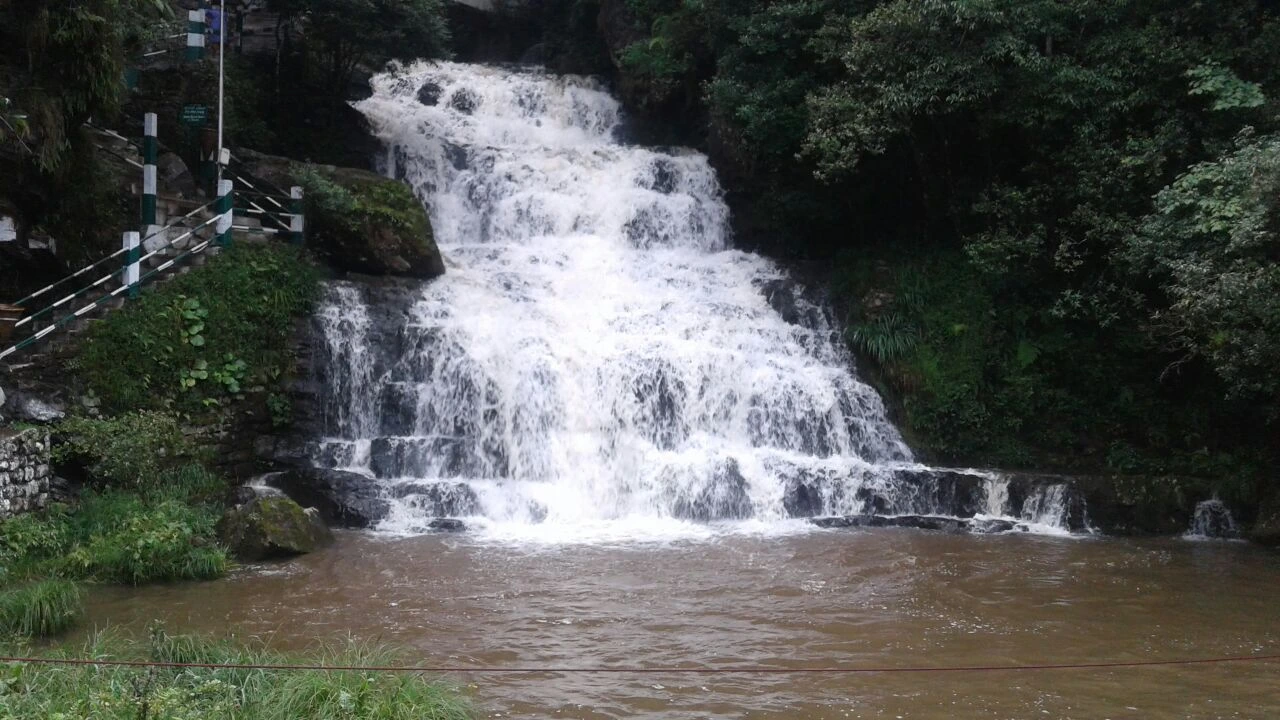
Before planning your descent to the lowest tier, check out our detailed Elephant Falls guide for tips on avoiding weekend crowds.
Morning: Elephant Falls
8 km from Police Bazaar (20 minutes). A three-tiered waterfall in a forested gorge — the approach involves 200 steps down to the lowest tier. Entry Rs 20 per person. Best before 10 AM on weekends. The first tier (visible from the top) is the most photographed; the lowest tier (requires the full descent) is the most impressive. Allow 1 hour.
Late Morning: Shillong Peak 10 km from city center. The highest point in Shillong at 1,965 metres — maintained by the Indian Air Force, with a check post that requires ID for entry. On clear days (October–November mornings are best), the view covers the entire Shillong plateau, Umiam Lake below, and the Assam plains to the north. Entry Rs 20. Allow 45 minutes.
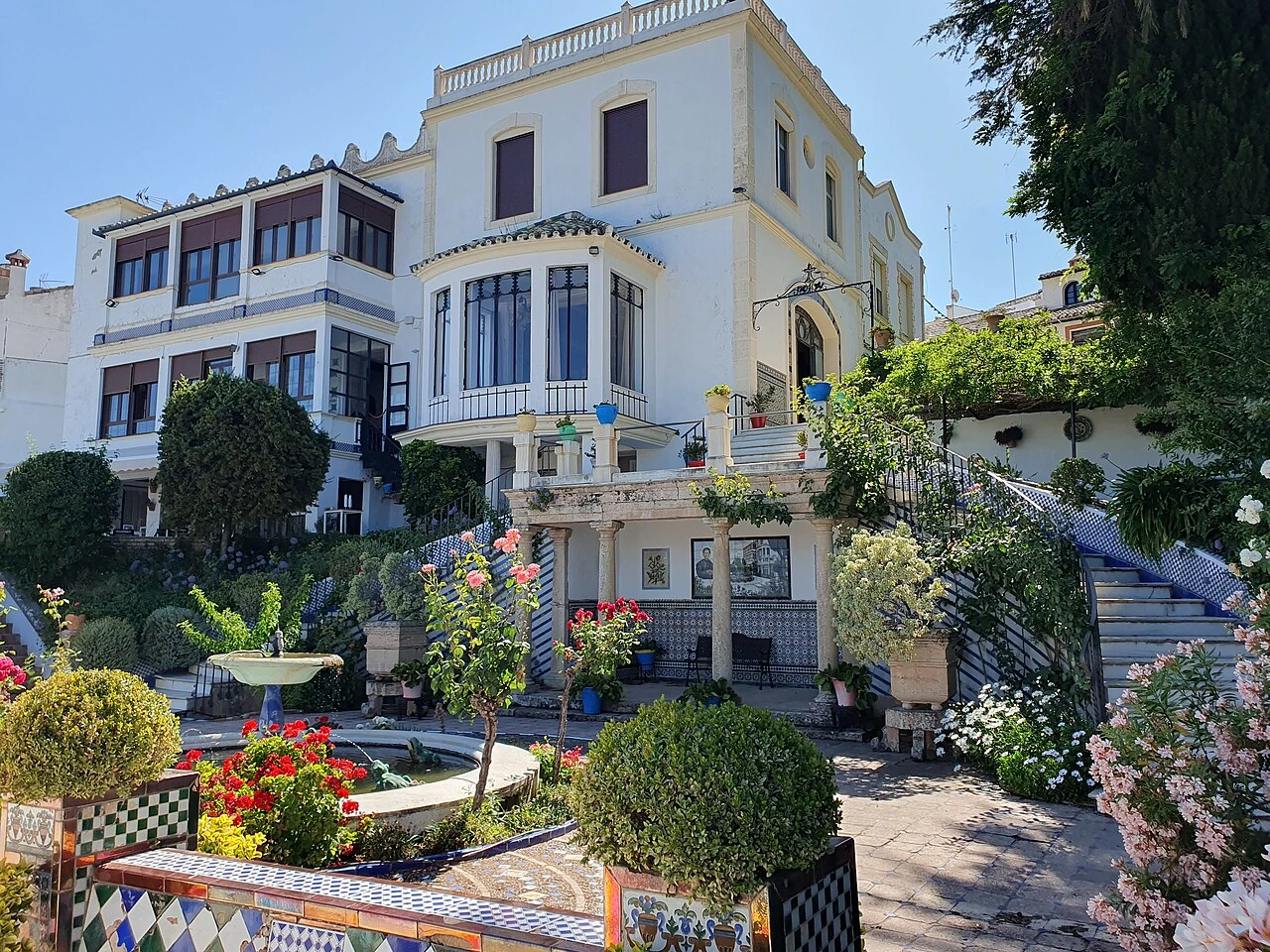
Afternoon: Don Bosco Museum of Indigenous Cultures Located in Laitumkhrah, 2 km from Police Bazaar. Seven floors of exhibits covering the cultures, traditions, textiles, oral histories, and material culture of Northeast India's indigenous communities — one of the most substantive ethnographic museums in India. Entry Rs 100 Indian nationals. Allow 2–2.5 hours. The rooftop viewing gallery gives a panoramic view of Shillong city. Closed Sundays.
Evening: Café culture in Laitumkhrah Laitumkhrah is Shillong's most active neighborhood for cafés — Cafe Shillong, Dylan's Cafe, and multiple smaller spots on Laitumkhrah main road. More relaxed than Police Bazaar, better food quality, local band performances on some evenings. Budget Rs 200–400 for dinner.
Day 3 — Cherrapunji (Sohra) Day Trip: Living Root Bridges and Seven Sisters Falls
Distance from Shillong: 54 km, 1.5–2 hours by road. Hire a full-day cab: Rs 2,000–2,800 for the vehicle (split between 2–4 people).
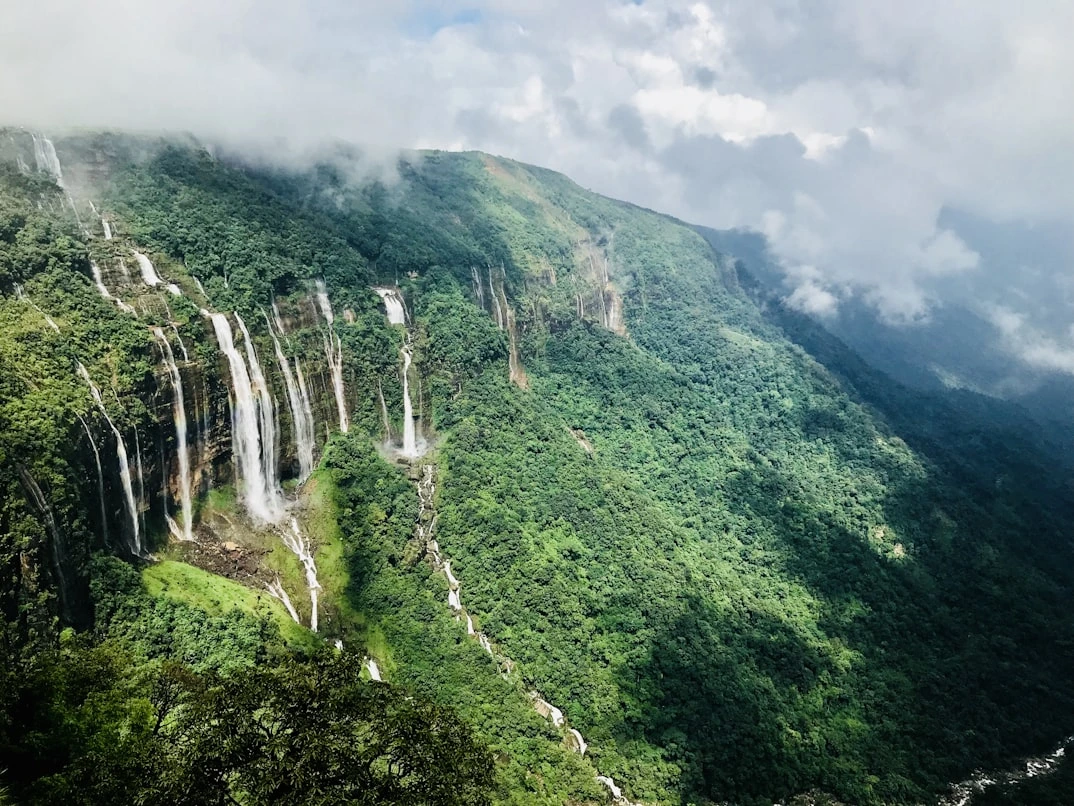
For an optimal viewing experience during the monsoon season, review our helpful Seven Sisters Falls details.
Morning: Seven Sisters Falls (Nohsngithiang Falls) The most accessible waterfall near Cherrapunji — a 315-metre cascade that drops in seven distinct streams into the valley. Best during and immediately after monsoon (July–November) for full flow; by February the flow reduces but the viewpoint remains excellent. Entry Rs 20. 10-minute walk from road parking to the viewpoint.
If exploring limestone formations excites you, read all about the Mawsmai Caves adventure to prepare for the narrow passages.
Late Morning: Mawsmai Caves 2 km from Cherrapunji town. A 150-metre limestone cave system with natural lighting at certain points — fully lit with electric lighting through the commercial section. Entry Rs 50. The cave narrows in sections — not suitable for claustrophobic travelers or young children. Allow 45 minutes.
As more travelers explore hidden spots like these, find out why Indians are choosing domestic holidays in 2026 for unique cultural experiences.
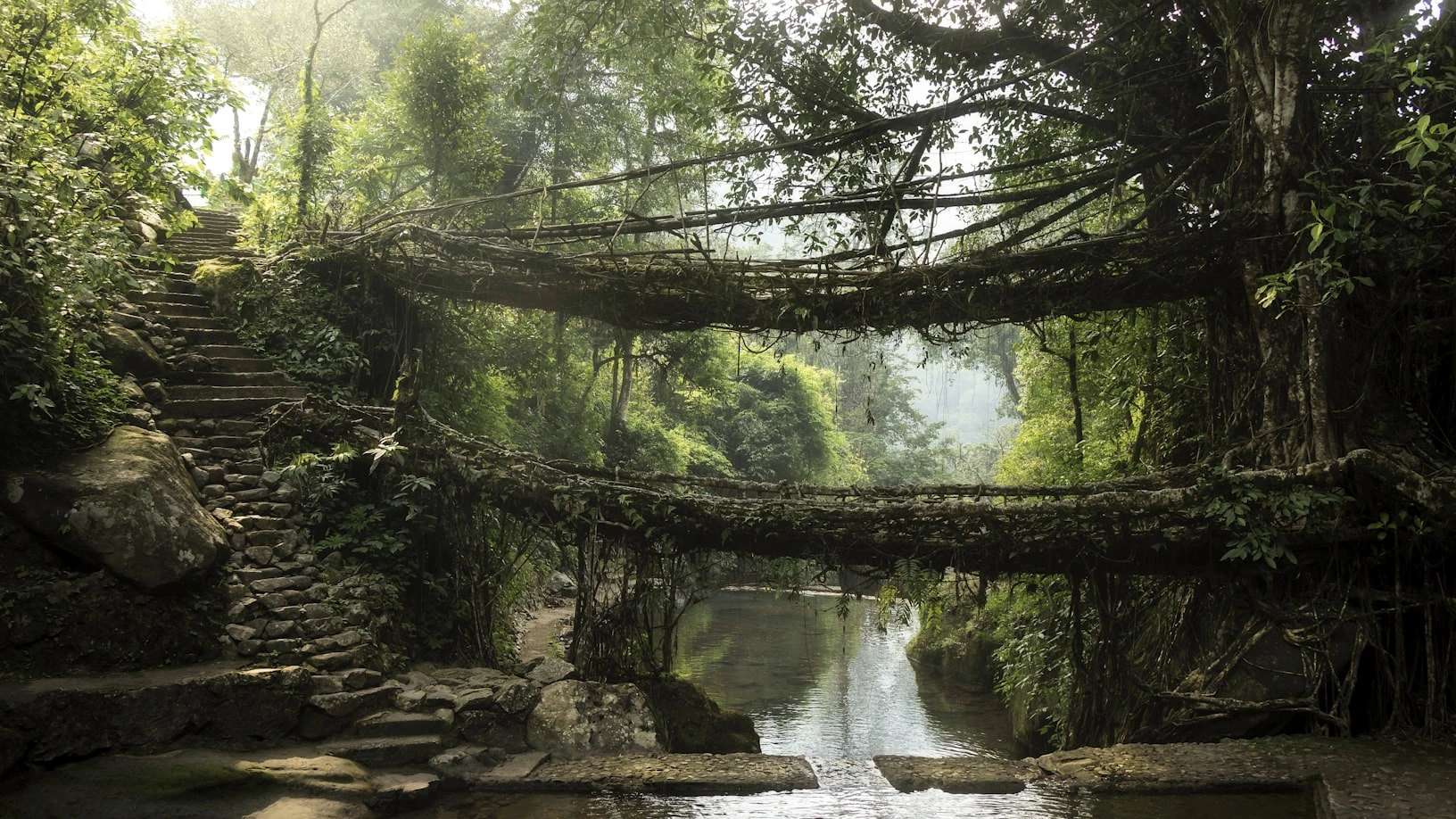
Afternoon: Nongriat Double Decker Living Root Bridge This is the Cherrapunji attraction that justifies the day trip. From Tyrna village (15 km from Cherrapunji), a descent of approximately 3,500 steps (2.5–3 km) leads to the Nongriat valley where two living root bridges — one above the other — have been grown by the Khasi community over 25+ years from Ficus elastica roots trained across the Umshiang river. The lower bridge is 30 metres long; the upper (double-decker) section is reached by a short additional climb.
Critical facts:
- Descent takes 1–1.5 hours; ascent takes 1.5–2 hours — total 4–5 hours round trip
- Not suitable for travelers with knee issues or those with significant fitness limitations
- There is a natural swimming pool at the base near the bridges — bring swimwear in season (November–April)
- Entry fee at Tyrna: Rs 50 per person
- Start no later than 11 AM to allow time for the descent, bridge visit, swim, and ascent before dark
- Homestay accommodation is available at Nongriat village if you want to split into two days — Rs 400–700 per person per night including meals
Evening: Return to Shillong. Cherrapunji town has limited dinner options — eat at your hotel or at a Laitumkhrah restaurant on return.
Day 4 — Dawki Day Trip: Umngot River and India-Bangladesh Border
Distance from Shillong: 82 km, 2.5–3 hours by road (the road descends from the Meghalayan plateau to the Bangladesh border valley — the drive itself is scenic). Hire a full-day cab: Rs 2,500–3,500 for the vehicle.

For exact boat hire rates and crossing details, explore our honest guide to the Umngot River in Dawki.
The Umngot River Reality Check The Umngot river at Dawki is not exaggerated in photos. The water is genuinely clear — visibility of 5–8 metres in the dry season (November–March), with boats appearing to float on air above the white sand and pebble riverbed. This is caused by the absence of industrial activity upstream and the low sediment load from the surrounding limestone terrain.
What has changed in 2026: The number of boats on the river on weekend mornings from November to February is now significant — 40–60 boats operating simultaneously during peak hours (10 AM–2 PM). The clarity is still present but the experience of "private crystal river" that 2020–2022 visitors describe requires an early start.
Arrive by 8 AM — boats begin operating from 7:30 AM and the river is at its quietest before the Sunday tour groups arrive from Shillong.
Boat hire: Rs 400–600 per boat per 30 minutes (holds 4 people). Negotiate at the ghat — fixed price boards are posted by the local operator association.
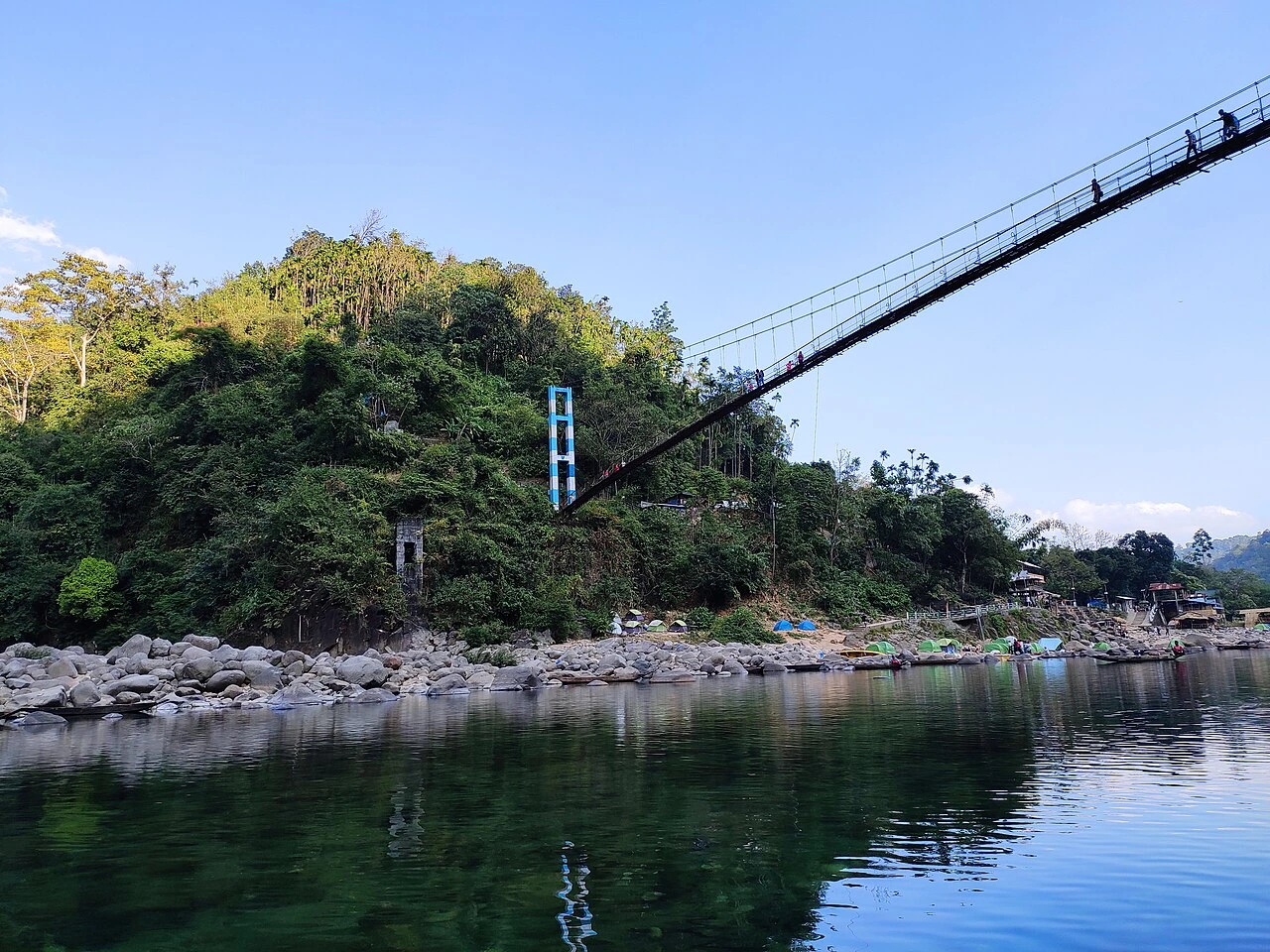
Dawki Suspension Bridge: 1 km from the boat ghat — a colonial-era suspension bridge over the Umngot, still in functional use. Worth the 20-minute walk.
India-Bangladesh Border (Tamabil Zero Point): 2 km from the boat ghat. The border gate is visible from the Indian side — a functional international land border checkpoint. Not a tourist site in the conventional sense but the context (Bangladesh is 500 metres away, the valley is shared between the two countries) is striking.
Return to Shillong by 4–5 PM. Evening flight connection from Guwahati if departing Day 4 — allow 3.5–4 hours from Shillong to Guwahati airport including check-in time, departing Shillong by 1–1.30 PM.
Exact Cost Breakdown — Per Person, 4 Days
Flights (Return, Economy)
| Origin | Approximate Return Fare (Book 4-6 weeks ahead) | Airlines |
|---|---|---|
| Delhi → Guwahati | Rs 5,000–9,000 | IndiGo, Air India, SpiceJet |
| Mumbai → Guwahati | Rs 6,000–11,000 | IndiGo, Air India |
| Bangalore → Guwahati | Rs 5,500–10,000 | IndiGo, Air India |
Peak season (December 20–January 5): add Rs 3,000–6,000 to above figures.
Ground Costs — Per Person, 4 Days (Ex-Flights)
| Expense | Budget | Mid-Range |
|---|---|---|
| Guwahati Airport → Shillong (shared cab) | Rs 300 | Rs 800 (private, split 2) |
| Accommodation (3 nights Shillong, 1 night if Nongriat) | Rs 2,400–4,500 | Rs 6,000–12,000 |
| Food (4 days — local dhabas to mid-range restaurants) | Rs 1,200–2,000 | Rs 2,500–4,500 |
| Cherrapunji day cab (split 2 people) | Rs 1,200 | Rs 1,400 |
| Dawki day cab (split 2 people) | Rs 1,400 | Rs 1,800 |
| Shillong local auto / cab (2 days) | Rs 400–700 | Rs 800–1,500 |
| Entry fees (Elephant Falls, Don Bosco, Mawsmai, Nongriat, Dawki boat) | Rs 500–800 | Rs 800–1,200 |
| Miscellaneous (shopping, tips, data SIM top-up) | Rs 500–800 | Rs 1,000–2,000 |
| Total per person (ex-flights) | Rs 7,900–12,300 | Rs 14,300–24,400 |
Hotel Picks — Shillong 2026
Budget (Rs 800–2,000 per night)
Hotel Polo Towers — Police Bazaar area, 1 km from Ward's Lake. Budget rooms from Rs 1,200/night. Central location, reliable hot water, basic but clean. Direct booking: polotowersshillong.com
Hotel Centre Point — Thana Road, Police Bazaar. Rs 900–1,800/night. Walking distance to Police Bazaar market and restaurants. Popular with solo travelers — good security, consistent reviews.
MTDC Shillong Tourist Lodge — Jail Road, 1.5 km from Police Bazaar. Government-run, Rs 800–1,500/night. Book at mtdc.gov.in. Reliable but fills fast in peak season.
Mid-Range (Rs 2,500–6,000 per night)
Ri Kynmaw Resort — GS Road, Laitumkhrah. Rs 2,800–4,500/night. Good location for the café district, modern rooms, consistent hot water. Booking: via MakeMyTrip or direct call.
Hotel Landmark — Laitumkhrah. Rs 3,000–5,000/night. Established property, restaurant on-site serving Khasi and continental food, suits couples.
Tripura Castle — Cleve Colony, 3 km from Police Bazaar. A converted colonial-era building with character — older style but excellent setting. Rs 4,000–7,000/night. Book directly at tripuracastle.com for best rates.
Premium (Rs 7,000–15,000 per night)
Marriott Executive Apartments Meghalaya — Nongrim Hills. Rs 8,000–14,000/night. The most reliable premium option in Shillong — consistent quality, pool, all-day restaurant. Book at marriott.com.
Ri Kynjai — Serenity by the Lake — Umiam Lake, 17 km from city center. Rs 9,000–16,000/night. Built on the Umiam Lake edge in traditional Khasi style architecture. The best property near Shillong for couples who want a resort setting. Book at rikynjai.com.
What to Eat in Shillong — and Where

Jadoh — steamed red rice cooked with pork, black sesame, and ginger. The definitive Khasi meal. Rs 80–150 at local dhabas on Police Bazaar back lanes and Iewduh (Bara Bazaar) area.
Tungrymbai — fermented soybean paste cooked with pork fat and dried chilli. Strong flavour — an acquired taste but worth trying once. Available at local dhabas.
Pukhlein — deep-fried rice and jaggery flatbread. Street snack sold near Police Bazaar in the mornings. Rs 10–20 per piece.
Pork everywhere — Meghalaya's local pork (raised on bamboo shoot feed) is notably different in flavour from what most mainland Indian cities sell. Smoked pork with akhuni (fermented soybean) at any Khasi dhaba is the benchmark meal.
Best restaurant picks:
- Café Shillong Heritage — Police Bazaar, Rs 200–400/meal, good Khasi and Indian menu, popular with locals
- Dylan's Cafe — Laitumkhrah, Rs 250–500/meal, best coffee in Shillong, live music some evenings
- Trattoria — GS Road, Rs 300–600/meal, continental and Indian, good for couples wanting a quieter dinner
- Jadoh stalls at Iewduh (Bara Bazaar) — Rs 80–120/plate, the most authentic and cheapest Khasi food in the city, open mornings and afternoons
Best Time to Visit Shillong — Honest Monthly Guide
| Month | Weather | Crowd Level | Verdict |
|---|---|---|---|
| January | 4–15°C, dry | Medium-High | Good — clear skies, Dawki at peak clarity |
| February | 8–18°C, dry | Medium | Best for couples — clear, manageable crowds |
| March | 12–22°C, occasional rain | Low-Medium | Good — rhododendron bloom, pleasant temperatures |
| April | 16–24°C, pre-monsoon showers | Low | Quiet, green, some rain — acceptable |
| May | 18–24°C, increasing rain | Low | Quieter than most Indian hill stations but rains begin |
| June–August | 15–22°C, extreme rainfall | Very Low | Avoid — Cherrapunji receives 3,000–4,000mm in 3 months. Dawki road floods. Living root bridge trek becomes dangerous. |
| September | 16–22°C, rain tapering | Low | Transitional — waterfalls at maximum flow, roads sometimes blocked |
| October | 12–20°C, dry | Medium | Very Good — peak waterfall flow ending, clear skies beginning, manageable crowds |
| November | 8–18°C, dry | Medium-High | Best overall — clear visibility, all attractions accessible, Dawki at its clearest |
| December | 4–15°C, dry, cold nights | High (peak season) | Good weather, highest crowds of year — book 6–8 weeks ahead |
Ready to leave the lists behind and start planning? Head over to the free finder tool on our homepage to filter destinations by state and type, giving you personalized travel cards with direct booking options from Viator, GetYourGuide, and Klook.
Frequently Asked Questions
1. Is Shillong worth visiting in 2026 or is it getting overrun?
Shillong is worth visiting in 2026 but the "undiscovered Northeast" framing no longer applies. The 828% search surge is translating into real footfall at key spots — Dawki on weekend mornings now has 40–60 boats simultaneously, and the Nongriat living root bridge trail has commercial tour groups from 10 AM onwards. What makes Shillong still worth visiting is that it is genuinely different from any other Indian hill station — the Khasi culture, the food, the music scene, the Umngot river, and the living root bridges are not available anywhere else in India. The formula for getting a good experience in 2026 is: travel in October–November or February, stay 4 nights minimum, and reach Dawki and Nongriat before 9 AM.
2. How much does a 4-day Shillong trip cost from Delhi for a couple?
For a couple flying from Delhi with a 4-day trip including flights, the total cost ranges from Rs 30,000–50,000 depending on booking timing and accommodation choice. Flights return from Delhi to Guwahati cost Rs 5,000–9,000 per person booked 4–6 weeks ahead (Rs 10,000–18,000 for two). Ground costs in Shillong including accommodation, food, day cabs to Cherrapunji and Dawki, and activities run Rs 14,000–24,000 for two people over 4 days. Budget couples staying at mid-range guesthouses and eating at local dhabas can do the full trip for Rs 28,000–35,000. Those choosing the Ri Kynjai resort and private cabs throughout will be closer to Rs 55,000–70,000.
3. Is it safe for solo female travelers to visit Shillong?
Shillong is one of the safer Indian hill cities for solo female travelers, rated 8/10 in this guide. The Khasi community's matrilineal social structure creates a different street environment — solo women report significantly less harassment in Shillong's markets and public spaces than in most comparable Indian cities. Standard precautions apply: stay in the Police Bazaar and Laitumkhrah areas in the evening, use pre-booked cabs after dark, and do the Nongriat trek with at least one companion. The city is compact and walkable in the day, with active café culture that makes it comfortable for solo travelers to spend time independently.
4. Do I need an inner line permit for Shillong, Cherrapunji, and Dawki?
No. Indian nationals do not need an Inner Line Permit (ILP) for Meghalaya, including Shillong, Cherrapunji (Sohra), and Dawki. The ILP requirement applies to Arunachal Pradesh, Manipur, Mizoram, and Nagaland — not Meghalaya. Carry your Aadhaar or Passport as standard ID for check-in at hotels and any government checkpost. For traveling further into Meghalaya beyond the main tourist circuit, no additional permits are required for Indian nationals.
5. How do I get from Guwahati airport to Shillong — and what is the honest journey time?
The honest journey time from Guwahati airport to Shillong city center is 2.5–4 hours depending on the day and time. On weekday mornings the drive takes 2.5–3 hours on NH 40 via Jorabat. On Friday evenings and Saturday mornings during peak season (October–February), the Jorabat junction can add 1–1.5 hours — making it a 3.5–4 hour journey. The most reliable option is a pre-booked private cab at Rs 1,800–2,800 for the vehicle (book through your hotel in advance). Shared sumos cost Rs 250–350 per seat and depart regularly from outside the airport — economical but crowded and not suited for couples with luggage. Avoid the MTC bus from Guwahati city if coming directly from the airport — it requires a separate city transfer first.
Planning One of These Trips?
BestNear has complete destination guides for many of the places covered in this blog — with honest assessments, real budget breakdowns, day-by-day itineraries, and safety information:
To combine your northeastern adventure with island relaxation, review our Andaman & Nicobar 3-day itinerary. If you prefer Himalayan ranges, check our thorough guide to the best hill stations in Uttarakhand and learn the best time to visit Kedarnath. For coastal trips, we offer a realistic Goa 3-day trip plan as well as an overview of the best beaches in India. If you specifically want to avoid crowds on the coast, discover the top 10 hidden beaches in India. For weekend getaways closer to the metropolis, explore the best hill stations in Mumbai for vacation.